
I trained in industrial design — which means my entry point to any product is the physical world. How something sits in a hand. How a system fails under real conditions. How a user behaves when the stakes are actual. That training didn't change when I moved into digital design. It became the differentiator.
I'm drawn to products where the digital layer has to earn trust quickly — where the person using it is skeptical, overwhelmed, or dealing with something that actually matters. The design has to be worth the attention it asks for.
Industrial design training is not about making things look good. It is about understanding how things are made, how they break, how a person picks them up without thinking, and how a system holds together at scale. That foundation changed how I approach digital design — I start with the physical or behavioral constraint, not the screen. At Praan, that meant designing the digital face of a hardware company whose users didn't trust complexity. At Havells, it meant building enough knowledge of how physical products are engineered that I could design digital systems around them with credibility. That background is not something I left behind. It's the reason I design differently.
I build with AI tools as a core part of my design process — not as a shortcut, but as a craft. This portfolio was designed and shipped using Claude as both a thinking partner and a code collaborator. The Four Bridges Capital website was built with Claude and deployed on Vercel in a single day, then refined through further iterations. The Sol & Sky project involved Shopify AI for custom sections, Claude for bespoke code, and AI-generated product photography directed and refined to maintain consistent packaging details throughout.
In 2025, knowing how to work fluidly with AI tools is what separates a designer who ships from one who plans. I'm the former.
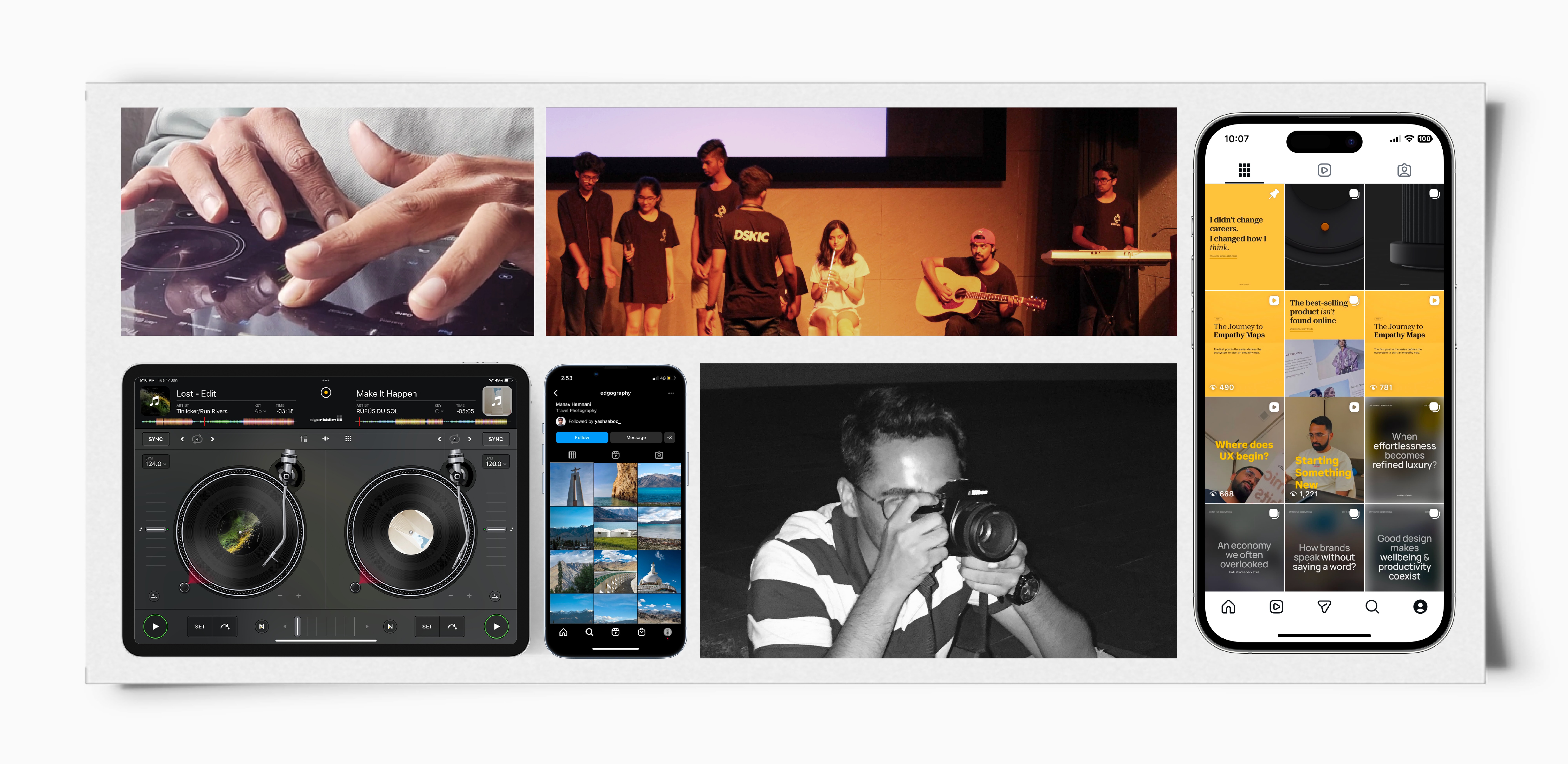
- Photography Travel and landscape — Nikon D5500
- Music Listening to Martin Garrix & Elderbrook on repeat
- Sport Roger Federer — Always trying to win one point at a time
- Thinking about How do you measure the impact of design?