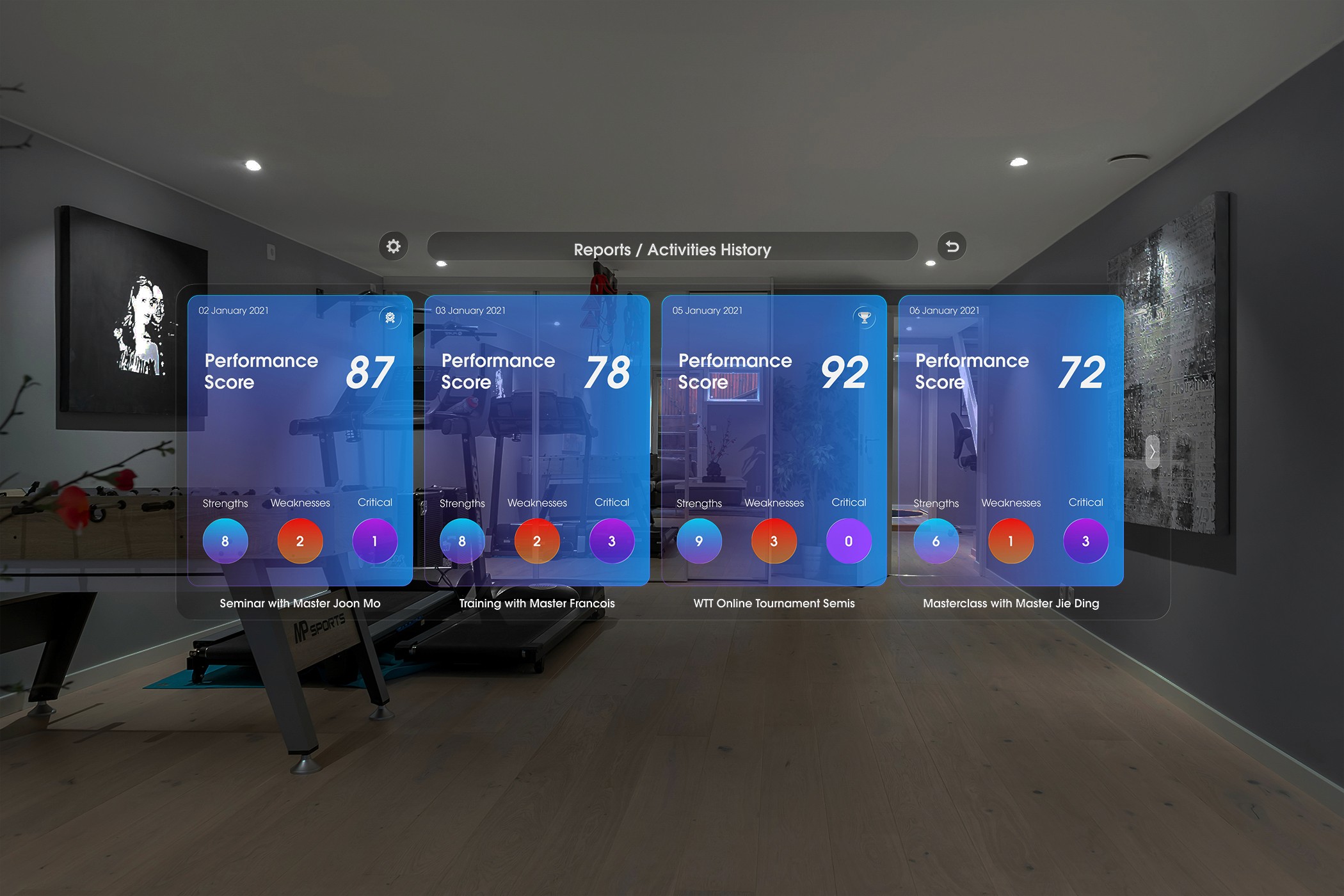
A virtual table tennis training platform for online learning
Project Type
Partnership
Partner
Decathlon (France)
Role
UI/UX Design
VR Design
Project Status
Concept Project
A Vision of Table Tennis Training:
Anytime, Anywhere
In collaboration with Pongori by Decathlon, this project set out to redefine how table tennis enthusiasts train, learn, and engage with the sport. Our vision was to create an omnipresent virtual training experience — one that seamlessly blends physical play with digital augmentation.
Practical. Sportive. Ludic
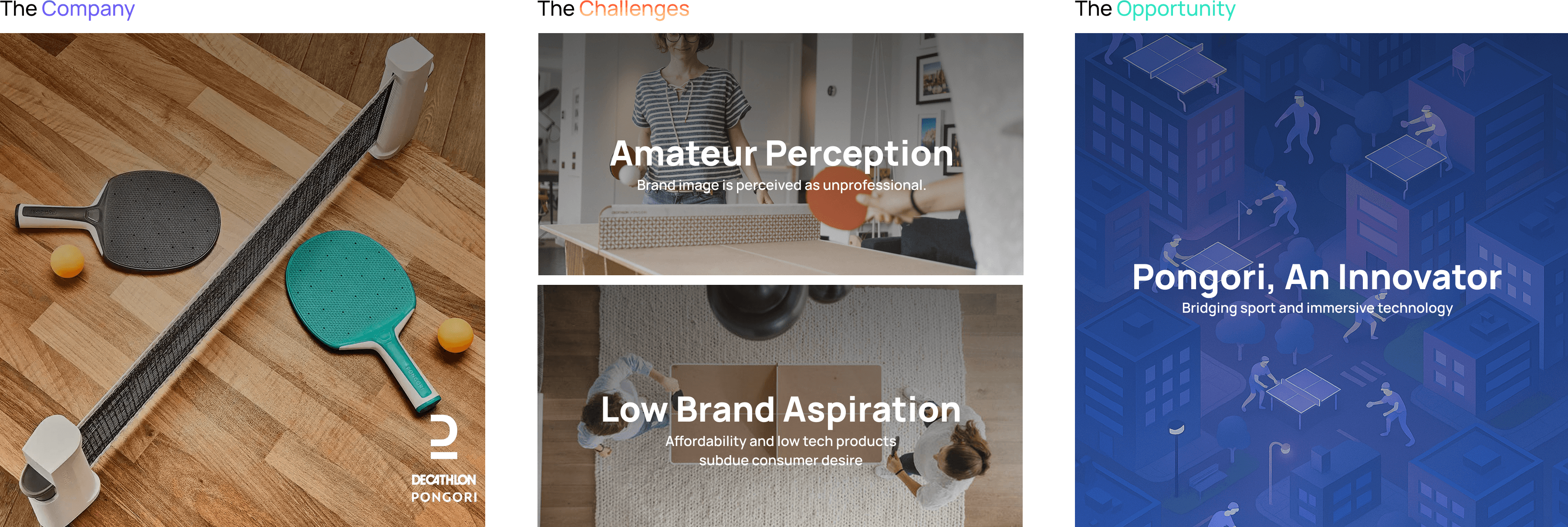
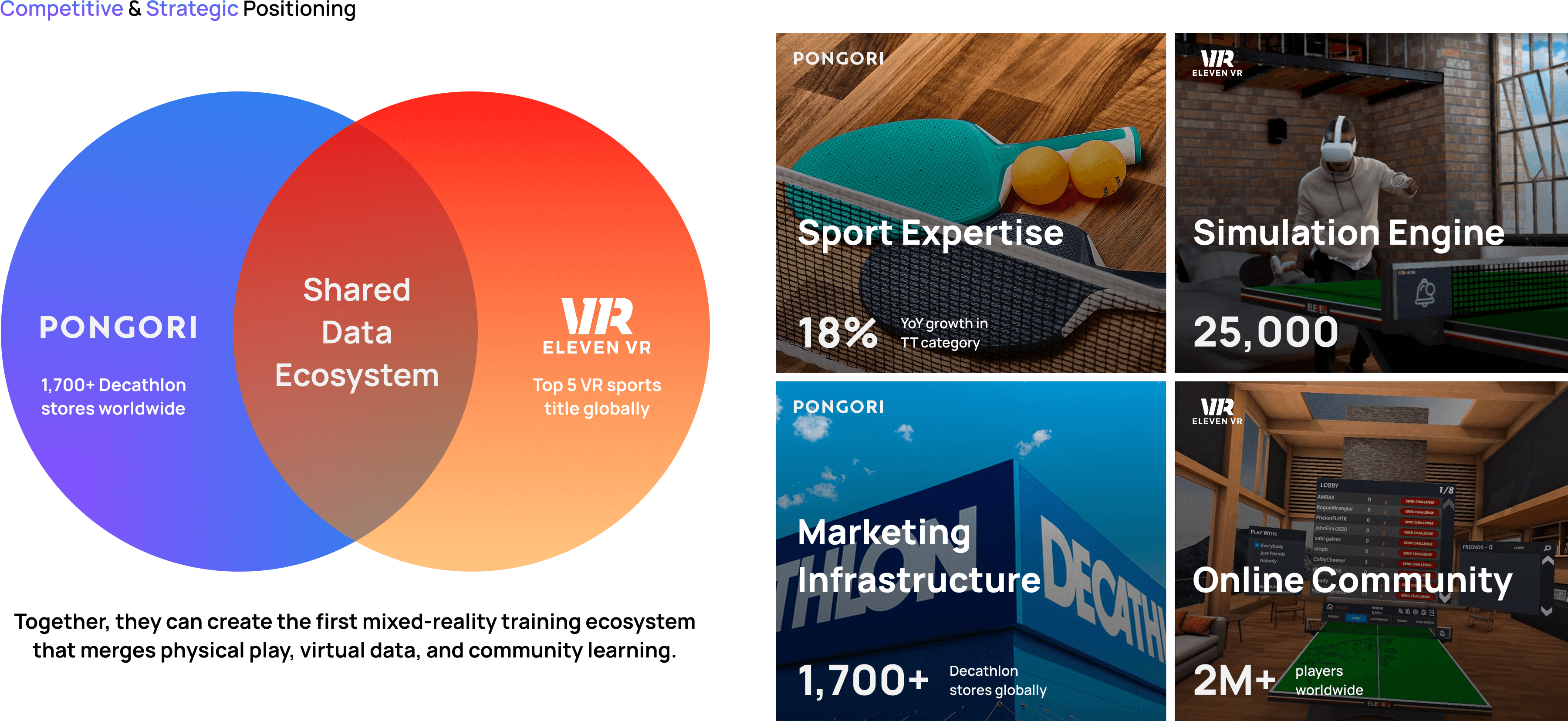
Pongori represents Decathlon’s progressive spirit in table tennis — aiming to make the sport more accessible, practical, and fun for domestic players.
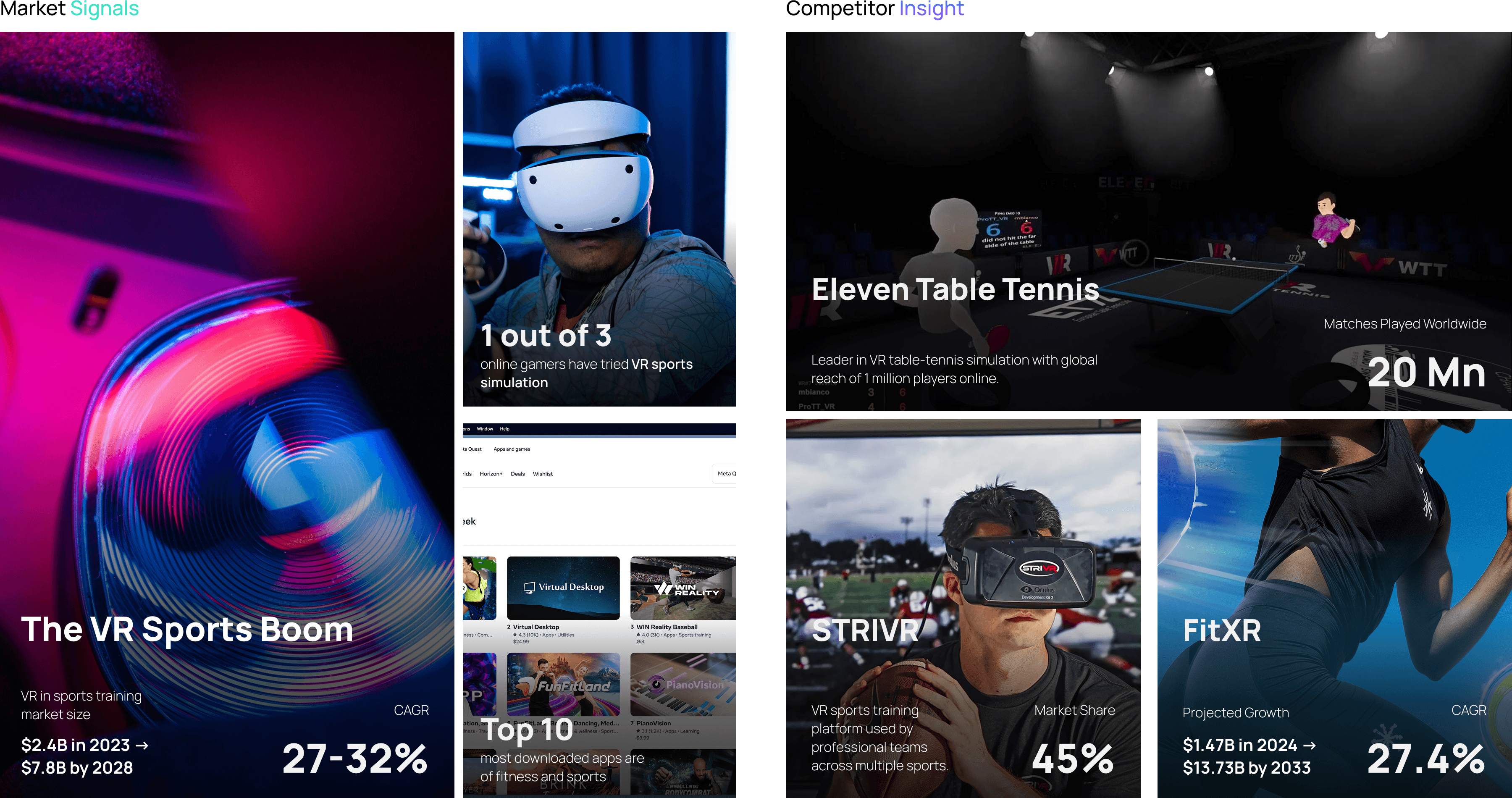
The Mixed-Reality Market is Exploding
Immersive sports training is accelerating fast. Athletes are increasingly comfortable training in blended digital–physical environments, and table tennis is one of the most VR-ready sports because of its speed, precision, and data-rich gameplay. A timely opportunity for Pongori to lead the next wave of mixed-reality sports innovation.
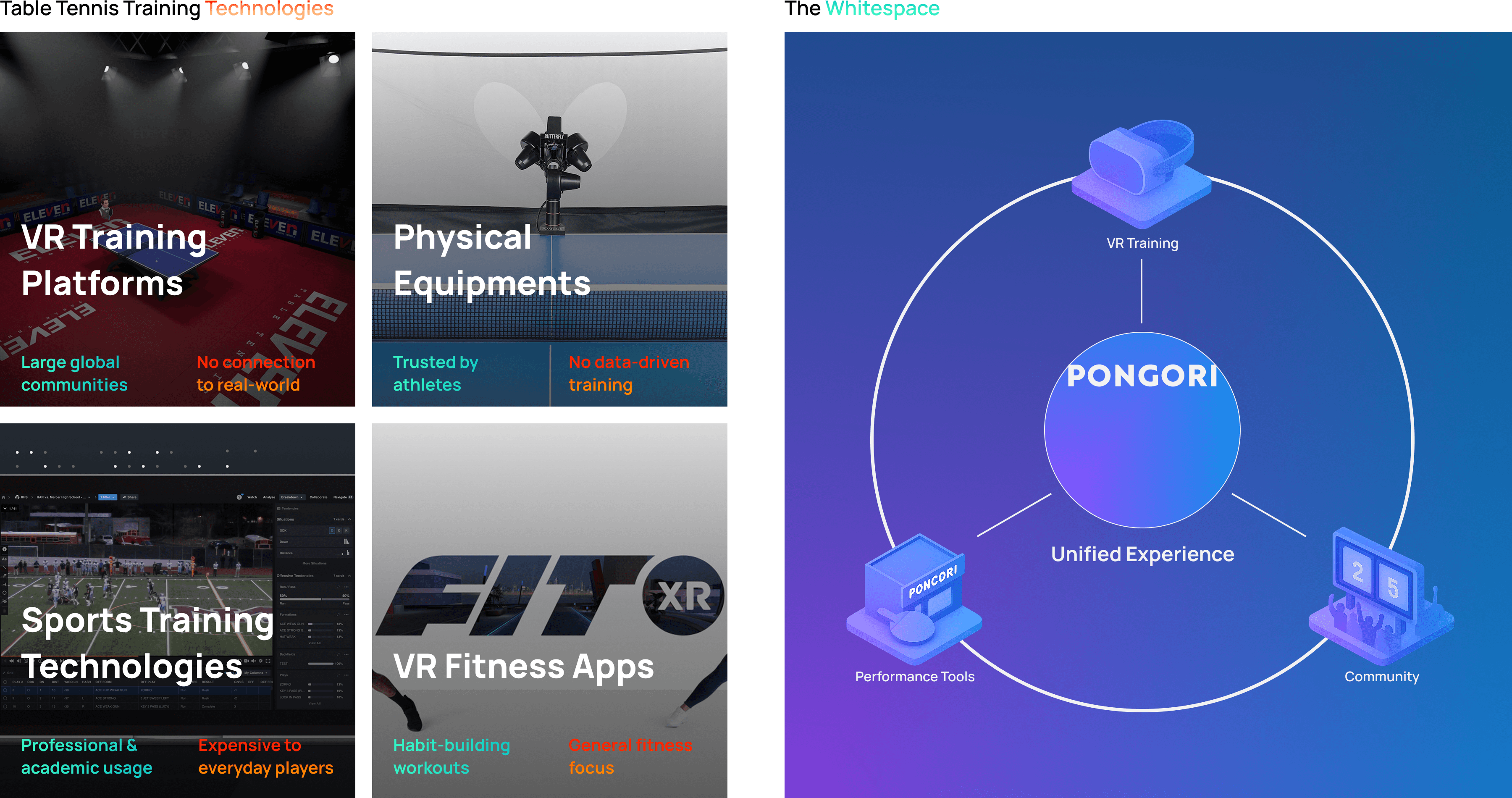
No Unified Experience
Traditional training relies heavily on physical coaching sessions, video analysis, and practice robots — effective but limited by accessibility and motivation. In the VR space, Eleven Table Tennis offers a strong simulation experience but lacks a real-world performance link or a brand ecosystem to sustain user growth.
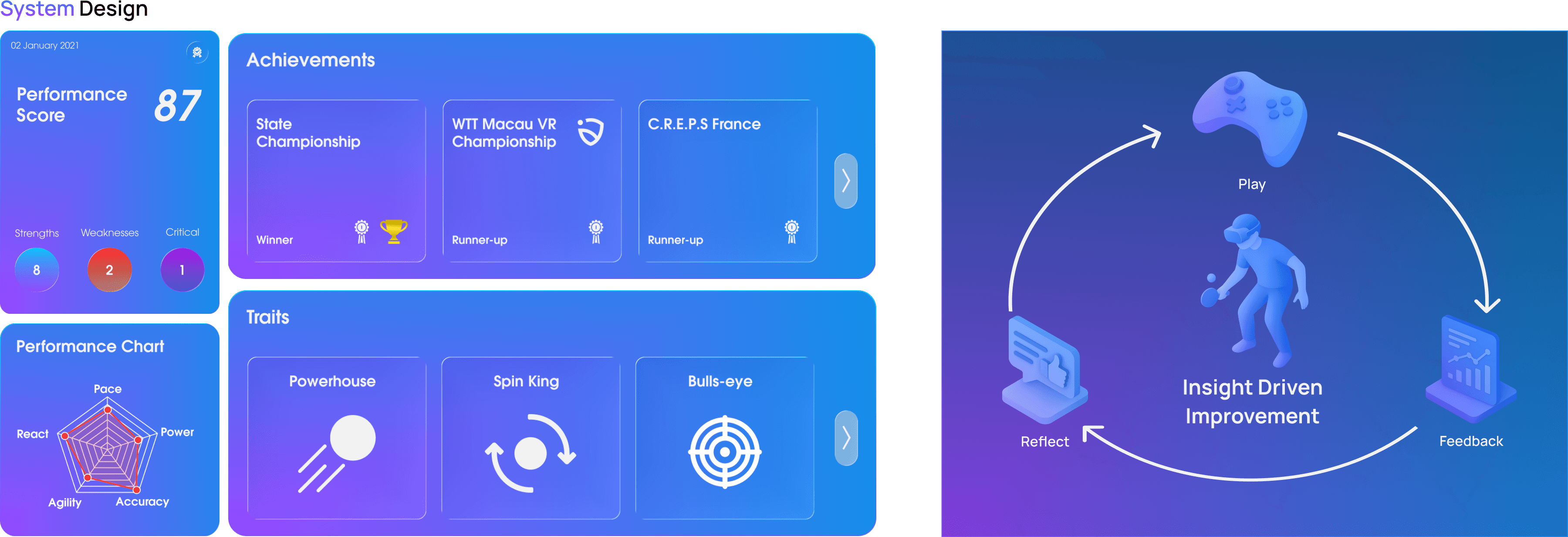
Professional training follows a structured learning loop
Effective table tennis training is not driven by endless repetition alone.
Across professional environments, players develop skill through a structured learning cycle — observing techniques, mimicking movements, and executing strategies under pressure. This process builds not only physical precision, but also timing, anticipation, and tactical decision-making.
Unlocking Possibilities
The virtual world is allows everyone to practice anytime and anywhere. For table tennis, it brings about quicker and sharper reflexes that reflects in real life training.
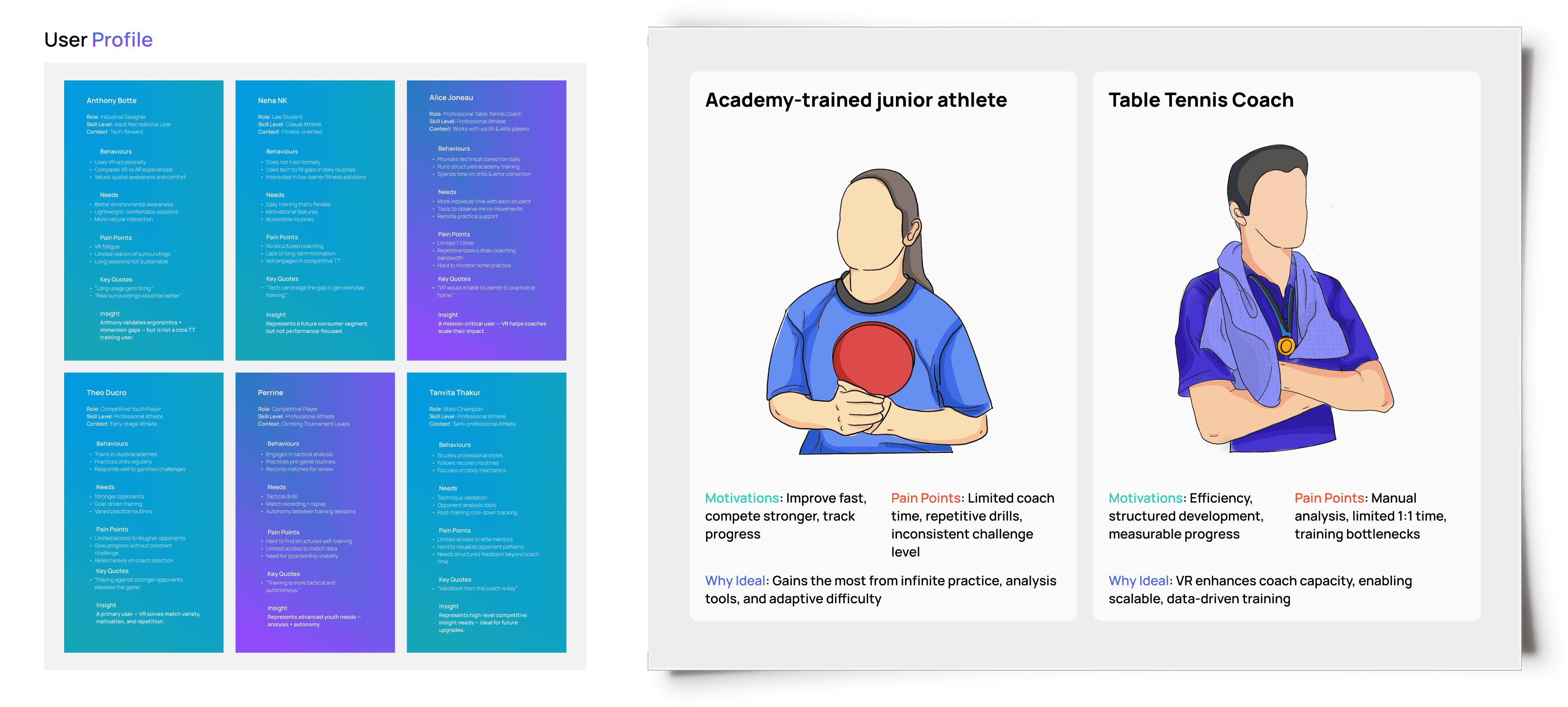
Identifying the Right Users
To understand who benefits most from a hybrid physical–digital training experience, we studied a wide range of users—players, coaches, professionals, and tech adopters. Their motivations reveal who truly needs Swift. The student and coach combine high motivation with clear performance gaps — making them the users who gain the most from unlimited practice, real-time feedback, and a scalable mixed-reality coaching system.
Physical Instincts meets Virtual Adaptability
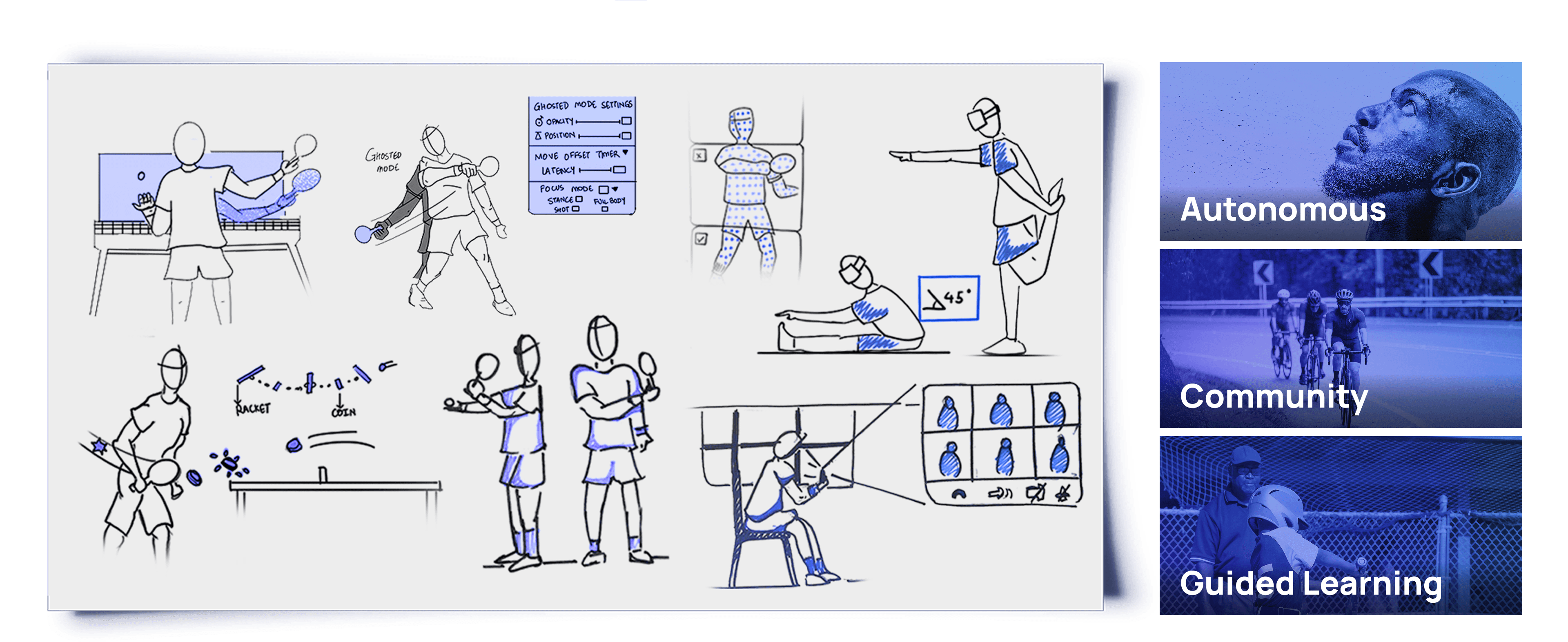
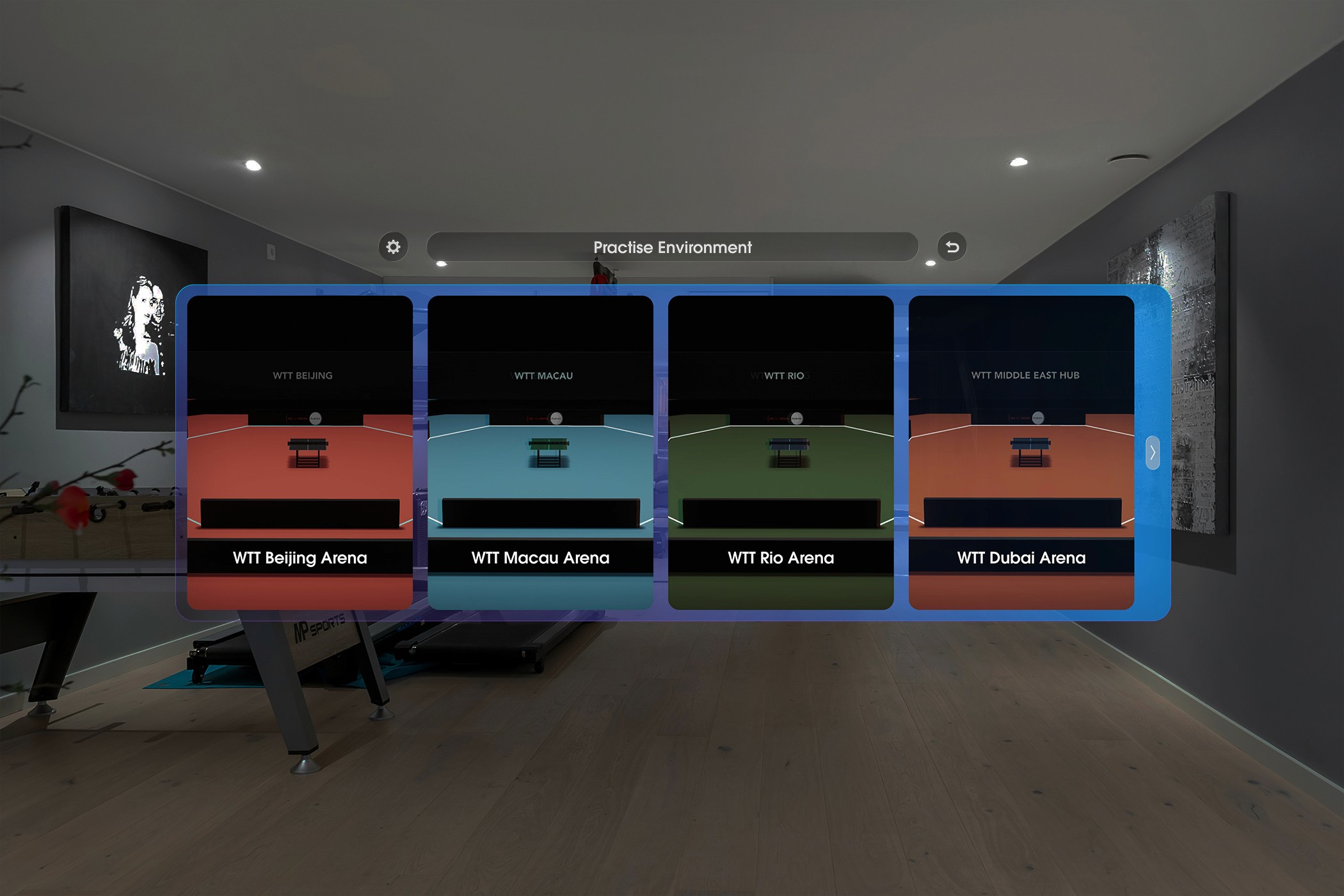
Inspired by the psychology of learning, each phase mirrors real-life coaching: observation builds strategy, mimicry sharpens reflexes, and execution tests adaptability. Within Swift, players can: warm up through guided drills, practice varied opponent styles, analyze gameplay in slow motion, and train autonomously or within a virtual community.
Structuring a Connected Training Ecosystem
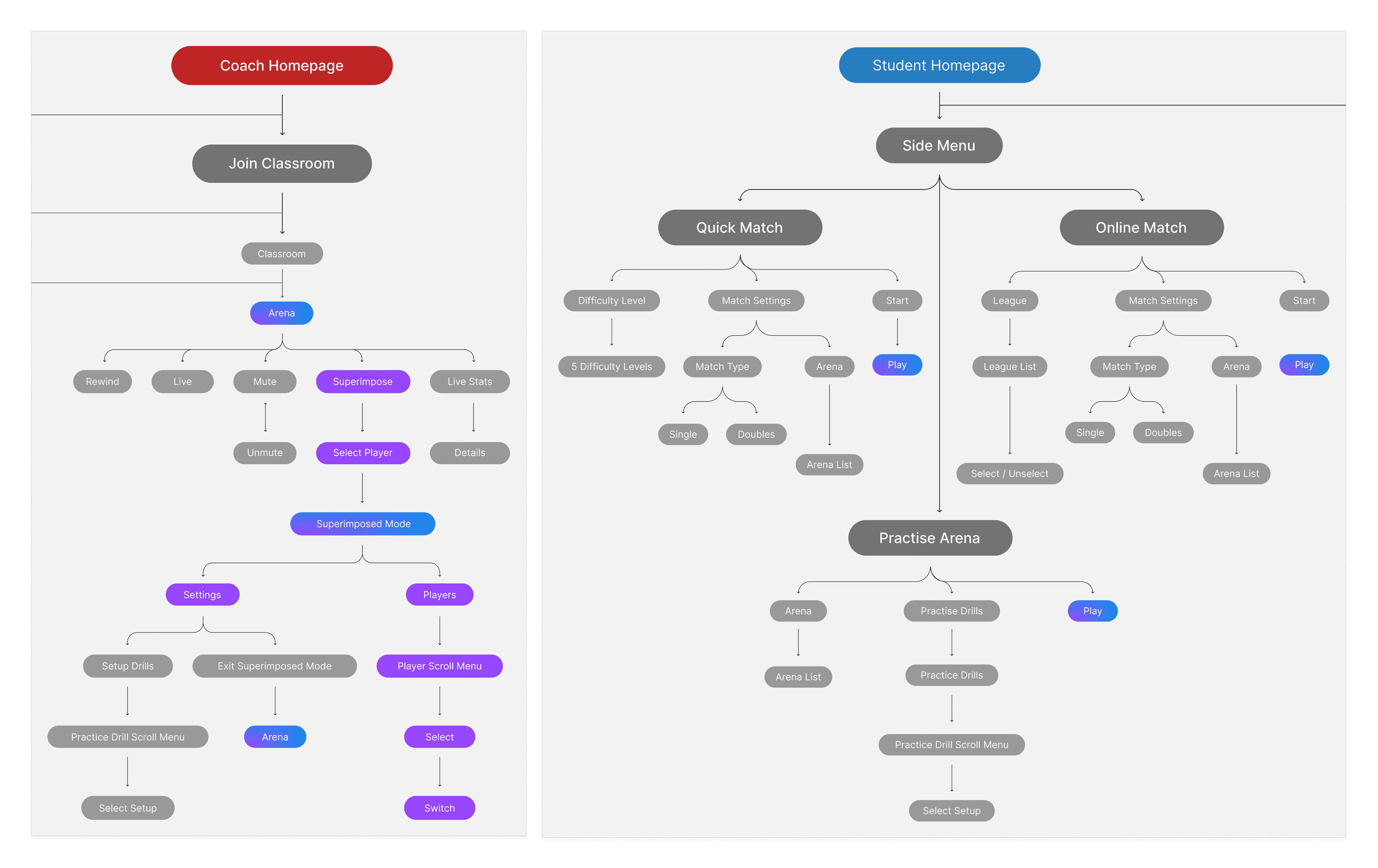
The user flow was built as a two-sided ecosystem connecting players and coaches in a shared learning space. A unified platform where students can join classes, practice drills, play AI matches, and track progress. Coaches access parallel dashboards to guide sessions, monitor performance, and correct player movements in real time — creating an immersive, data-driven training experience that bridges learning and mentorship.
Our vision was to create an omnipresent virtual training experience — one that seamlessly blends physical play with digital augmentation.
A global ecosystem of table tennis training
The virtual world allows students to learn from paddle masters around the world through training sessions and seminars, and provides a platform for participants to compete against each other 1v1 and through online tournaments
Coaching Without Physical Boundaries
Swift enables coaches to guide, observe, and correct players remotely—without losing the nuance of in-person training. Through familiar communication cues and shared virtual spaces, coaches can demonstrate techniques, monitor performance in real time, and provide contextual feedback, allowing meaningful training to continue beyond physical locations.
The bridge between the virtual and reality through super-imposed training scenarios
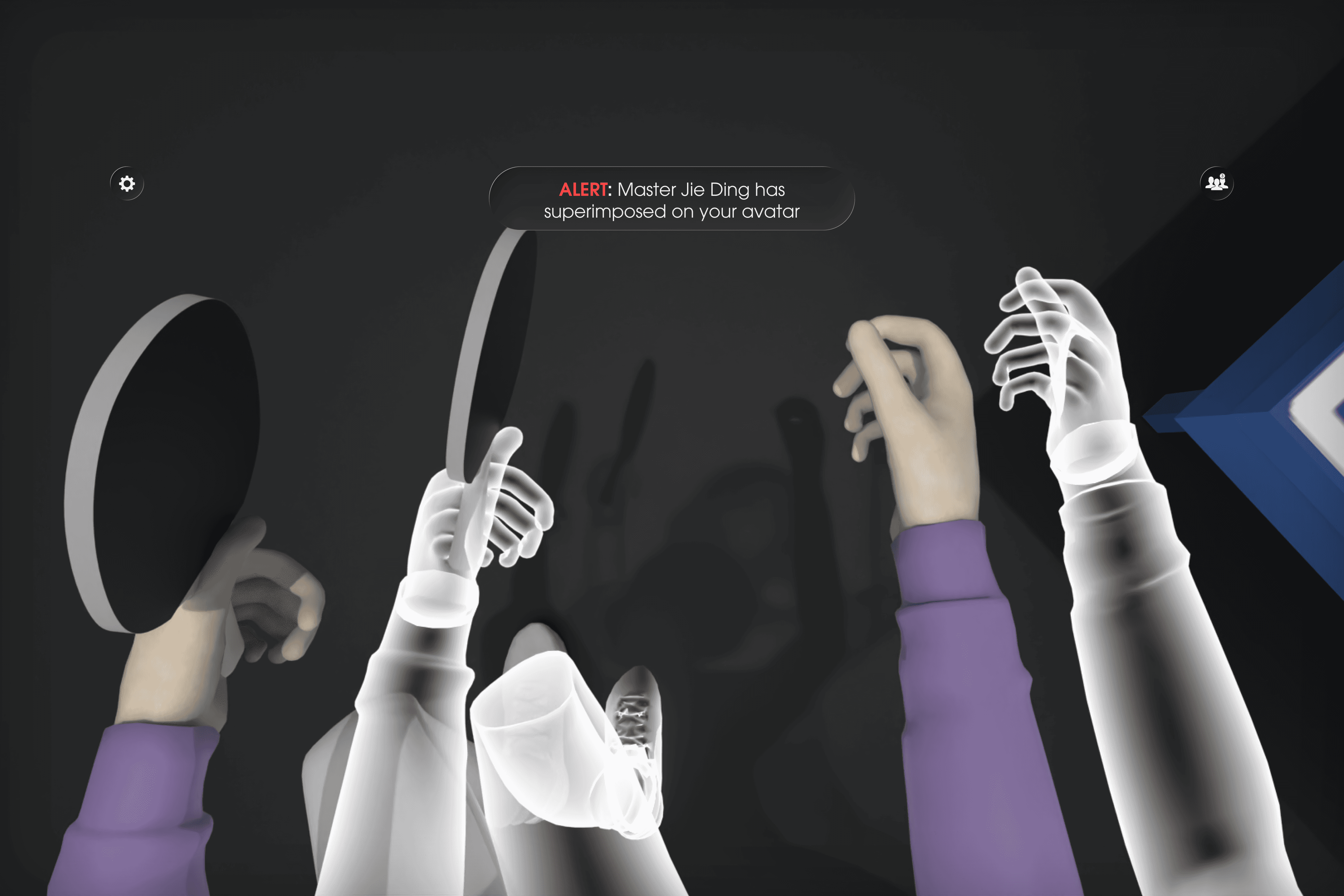
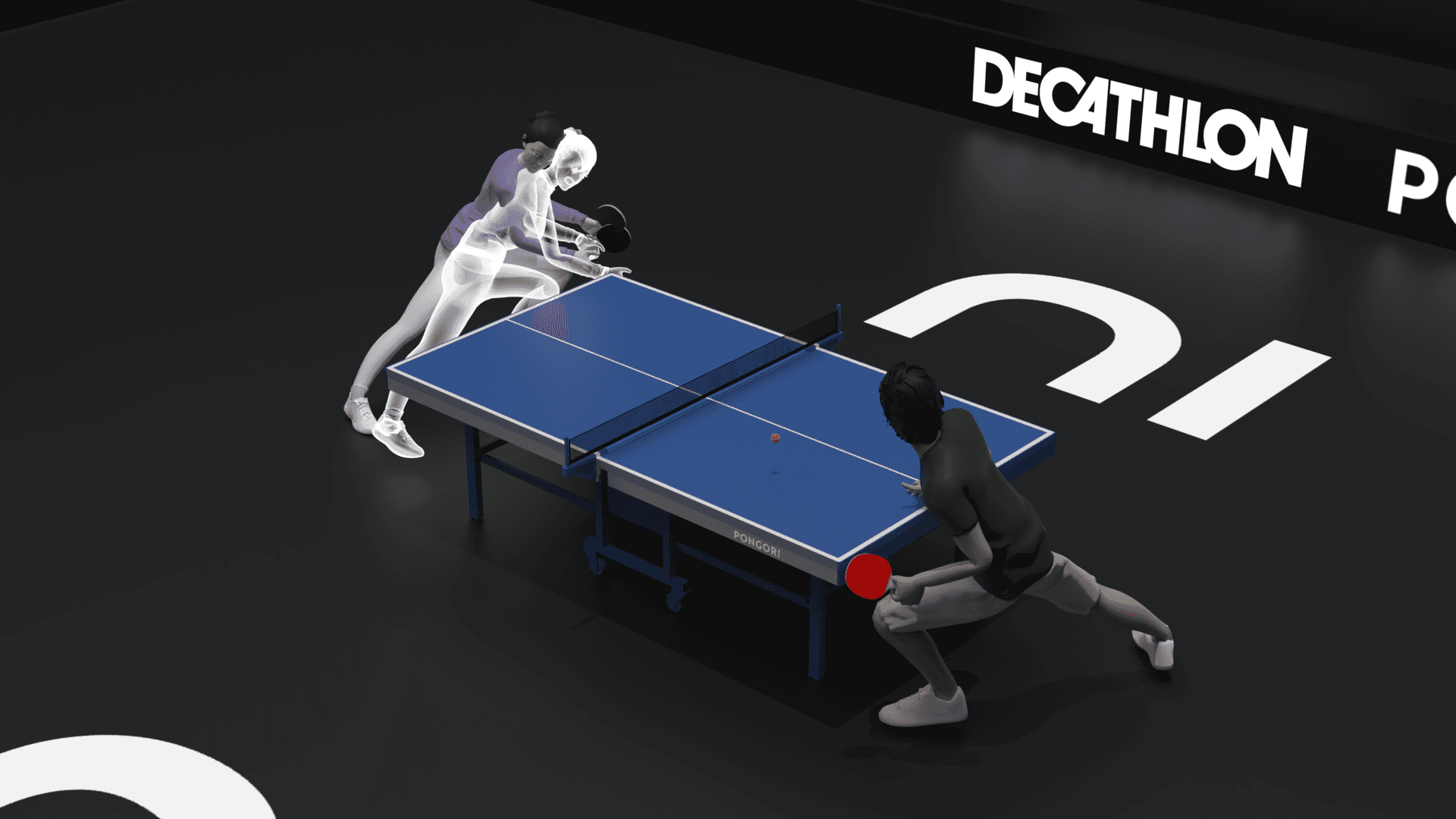
An efficient platforms for coaches to observe, review and assess the students in real-time. The coach can superimpose their avatar upon their student to showcase the right movement to allow the student follow their motion and correct themselves.
The Future of Connected Sports
Pongori brings sport expertise and mass accessibility. Eleven brings a global VR gaming community and simulation tech. Together, they can create the first MR training ecosystem that merges physical play, virtual data, and community learning.
Tools of Reflection
Beyond simulation, Swift integrates real-life haptics and generates feedback, transforming virtual play into measurable improvement. Each player’s gameplay data fuels a loop of self-analysis, helping them observe their strengths, refine timing, and receive remote coach feedback.
Mutually Beneficial System
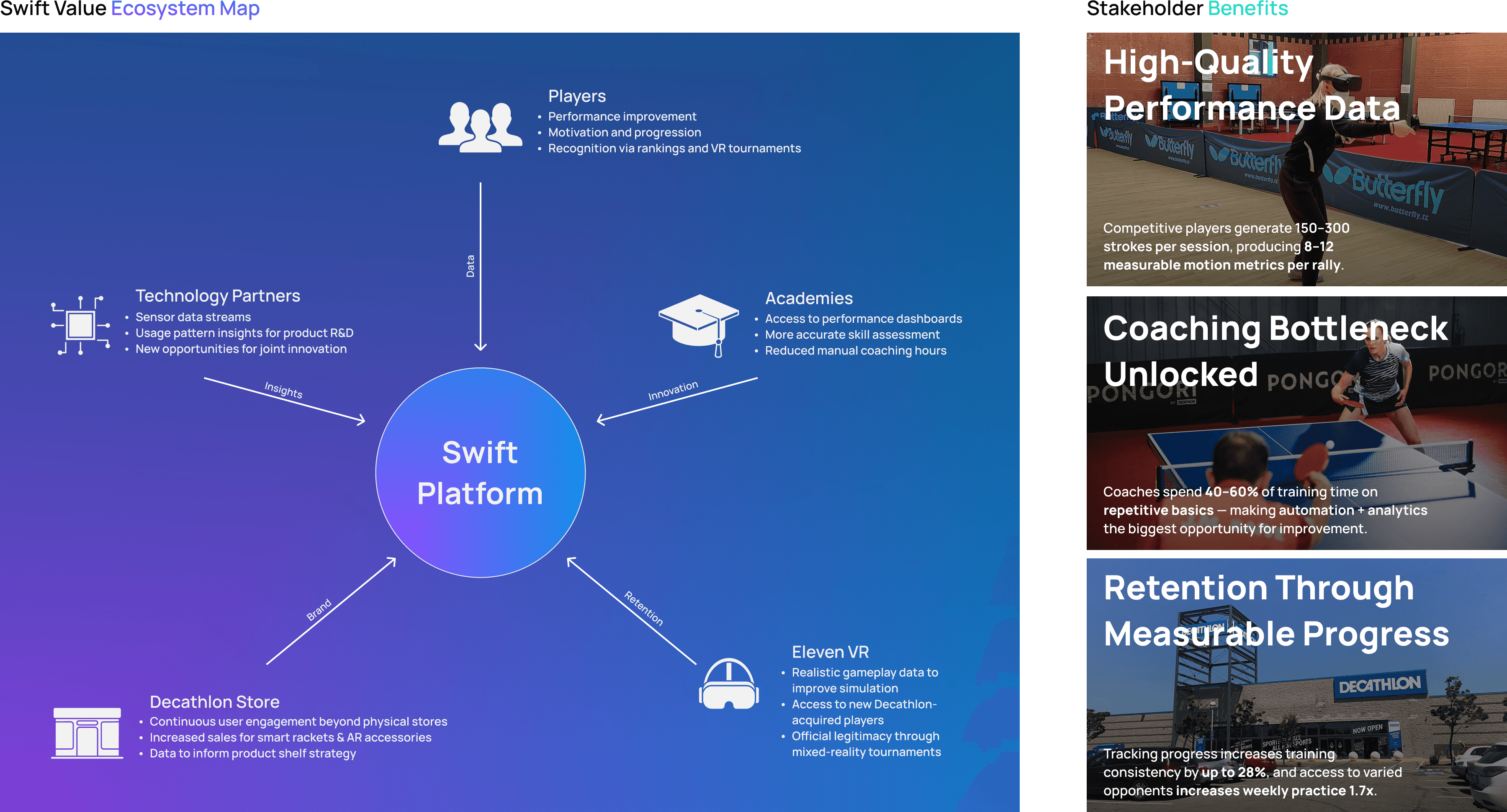
Swift acts as an intelligent, adaptive hub that gathers data, transforms it into insights, and redistributes value to every stakeholder in the ecosystem. This enables a continuous loop of performance, innovation, and engagement.
My Role & Reflection
As an industrial designer working across strategy and experience, I helped shape Swift beyond a VR interface into a connected training ecosystem for Decathlon. My work spanned project planning, defining the vision, structuring the training experience, and building the UI/UX foundation. This project expanded my practice from designing products to designing systems — understanding how immersive technology, data, and behaviour can create continuous participation. Swift ultimately taught me how to align brand, user motivation, and technology into one cohesive and adaptive experience.