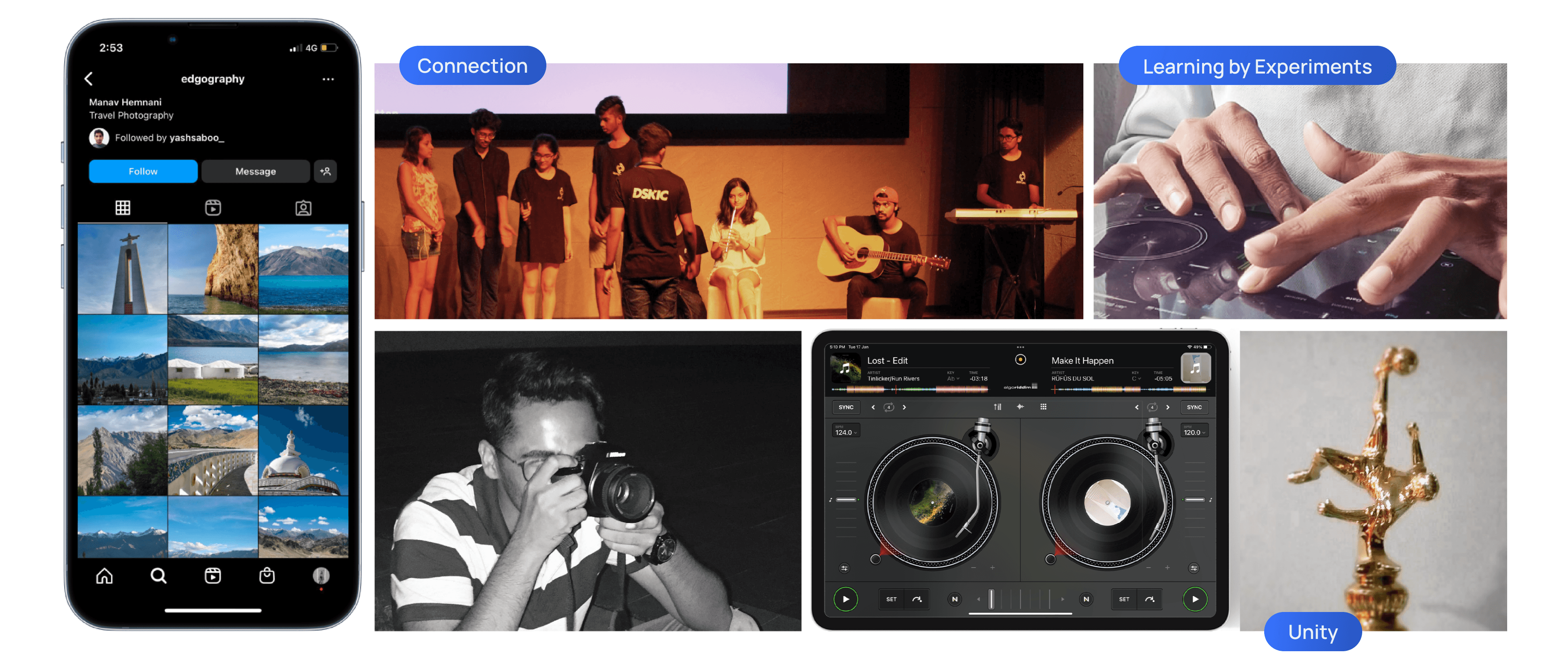
Growing up, I was always surrounded by hobbies: music, sports, creative activities. Many of these experiences were shared with others, and that sense of doing something together gave them meaning. Over time, however, I realized that many of these hobbies quietly disappeared. Not because people stopped loving them, but because life got in the way.
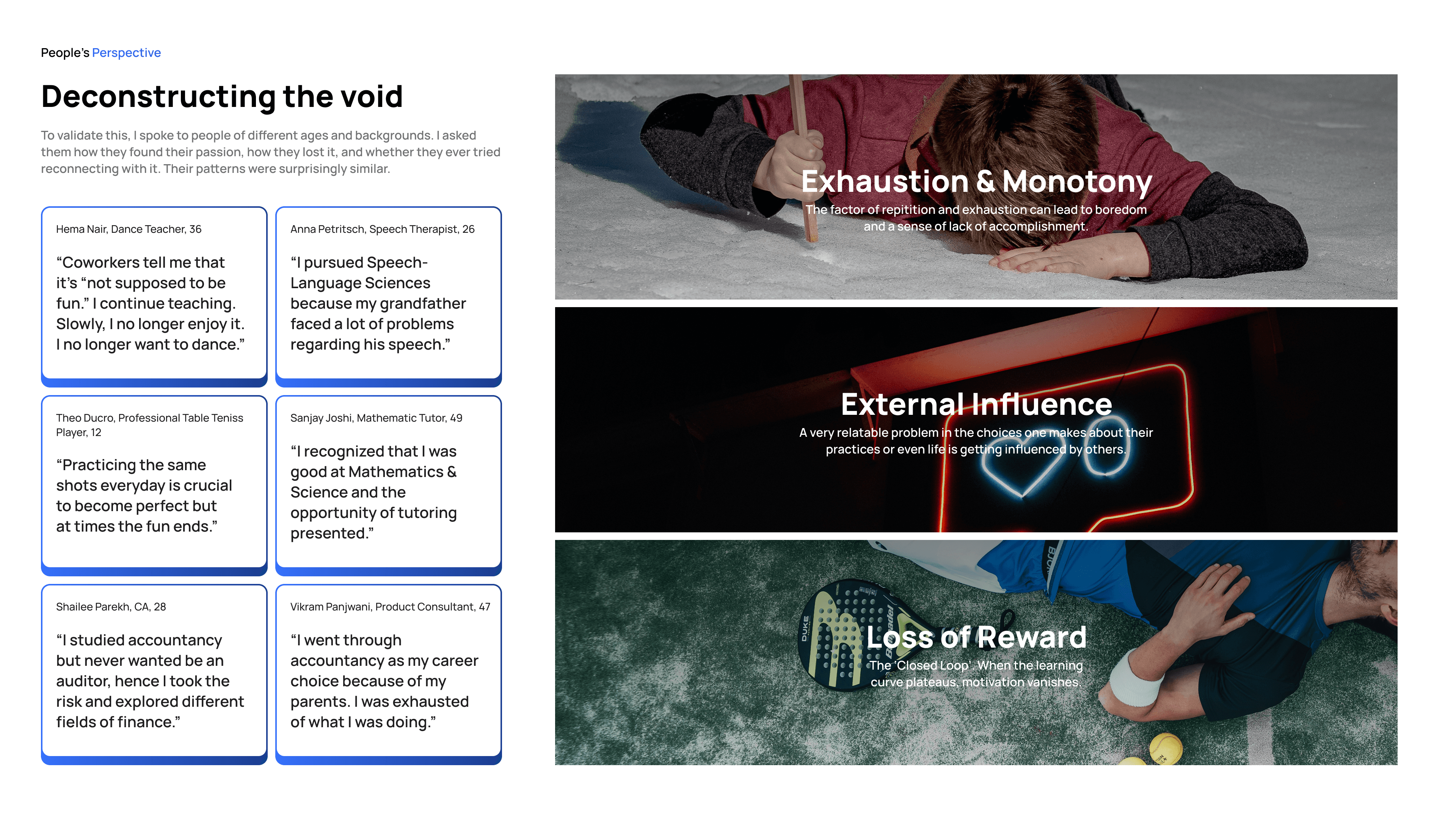
Hobbies are emotional, not logical.
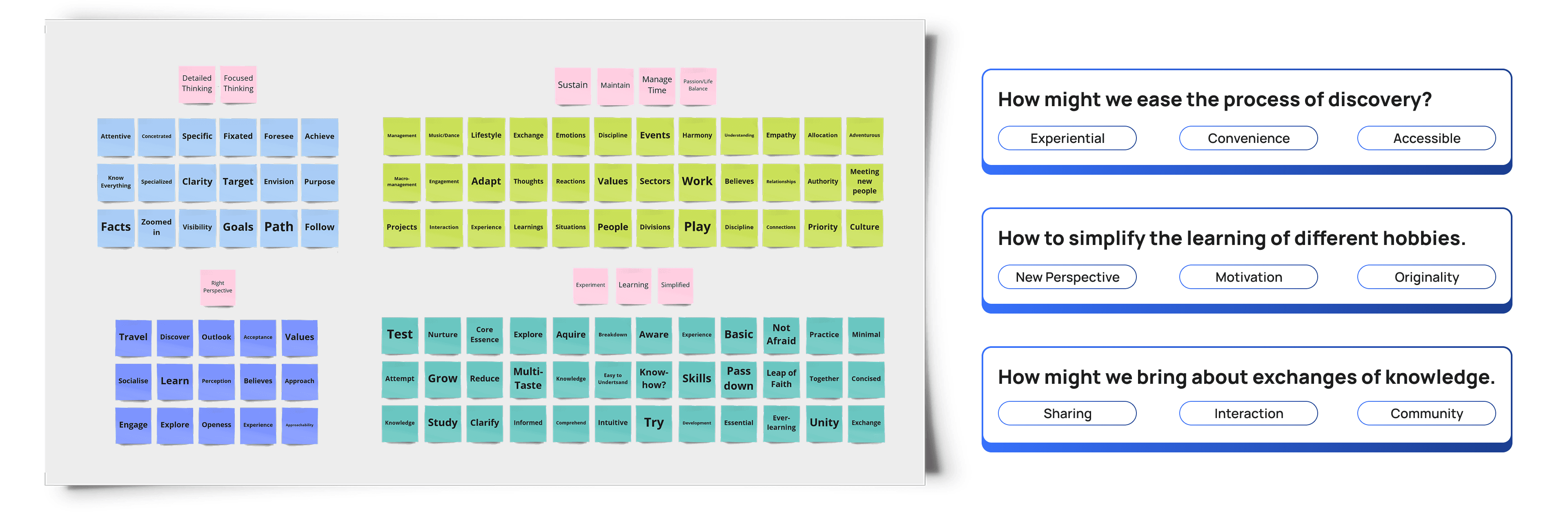
People stay engaged when learning feels simple and guided. Doing things with others increases motivation. Reflection helps people see progress and meaning. Passion needs flexibility to survive in real life. These conversations revealed that passion is not sustained by discipline alone, but by how supported and meaningful the experience feels.
Hobbies last when learning is simple, social, and flexible.
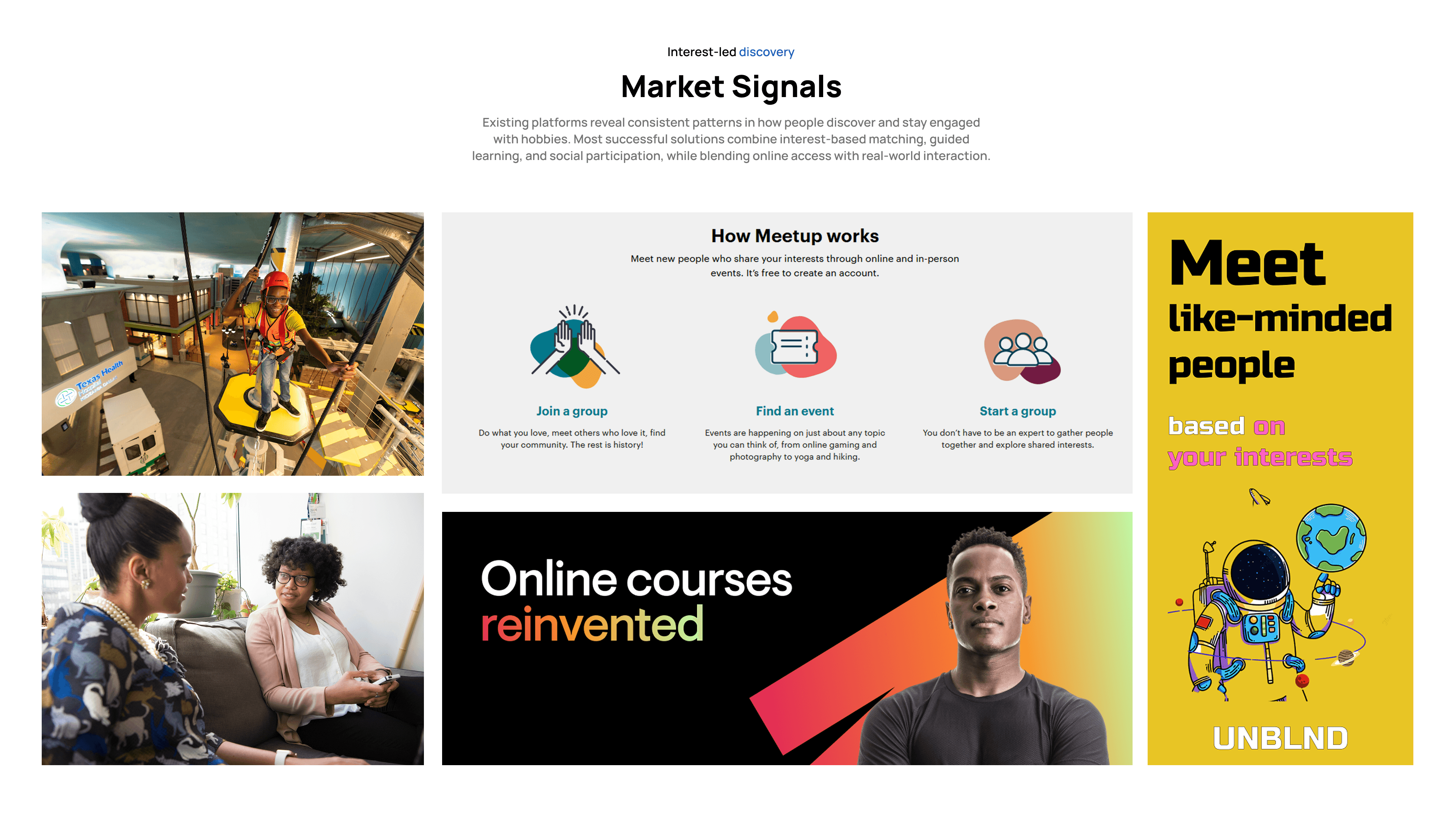
The strongest solutions didn’t rely on content volume, but on structure, guidance, and shared experiences. However, many of them struggled with accessibility, flexibility, or long-term engagement in everyday life.
Process of Rediscovery
To sustain passion, one must align purpose, passion, and talent. The proposed design intervention moves beyond simple social networking to offer trusted tutoring and structured experimentation.
Foundation of creative stories
The ideas at this stage were in the context of individual types of passions, a collection of practices, and all the passions. Initially, the ideas were congregated in terms of relationships with multiple hobbies. Followed up by grouping these related ideas within their respective subjects.
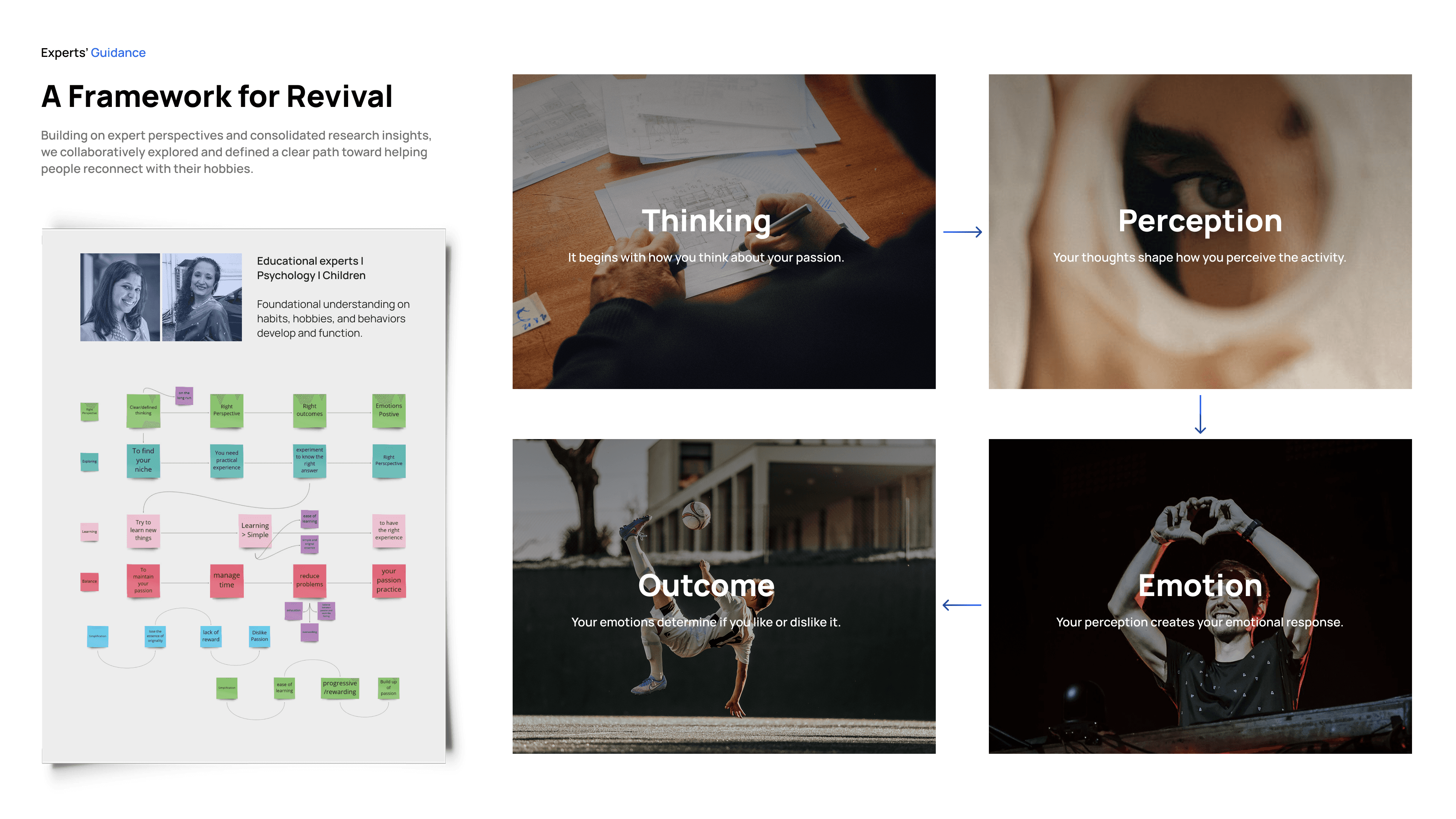
Built on Simplicity, Structure, and Community
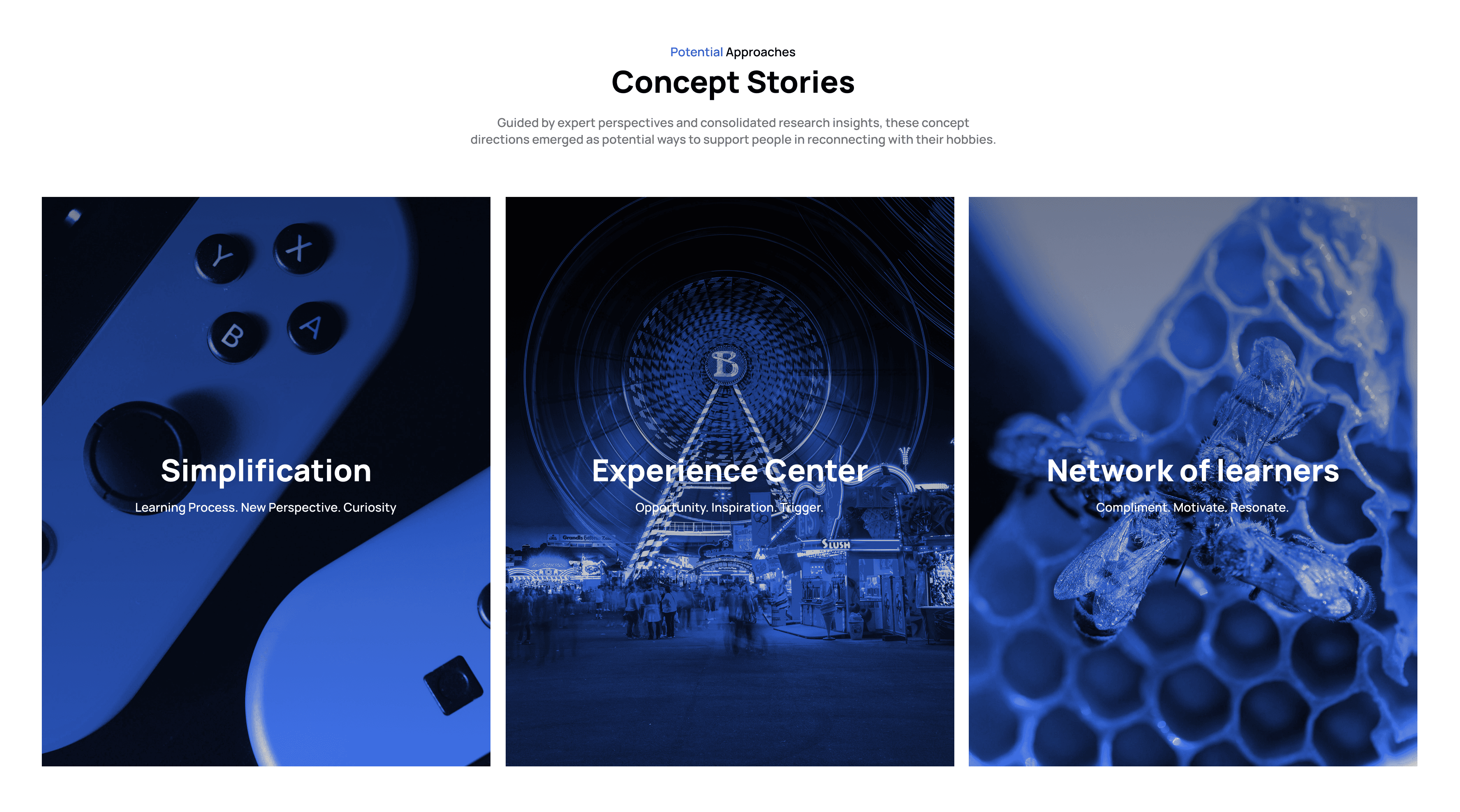
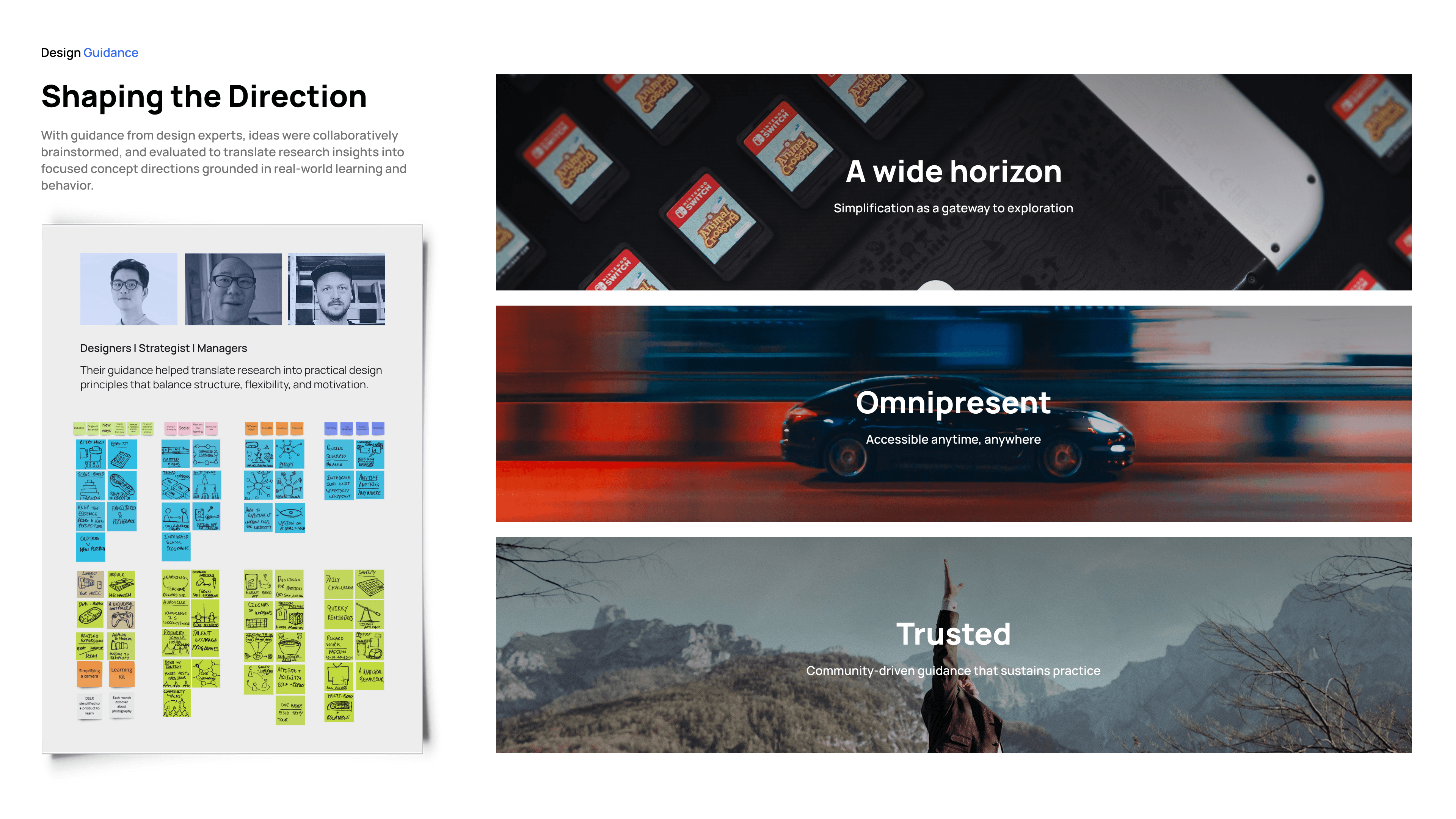
Insights from design strategists and senior practitioners revealed that simplification, structure, and community are the key catalysts for helping people rediscover and sustain their hobbies. These perspectives shaped a clear framework for how learning, motivation, and everyday life can work together.
Photography as the First Step
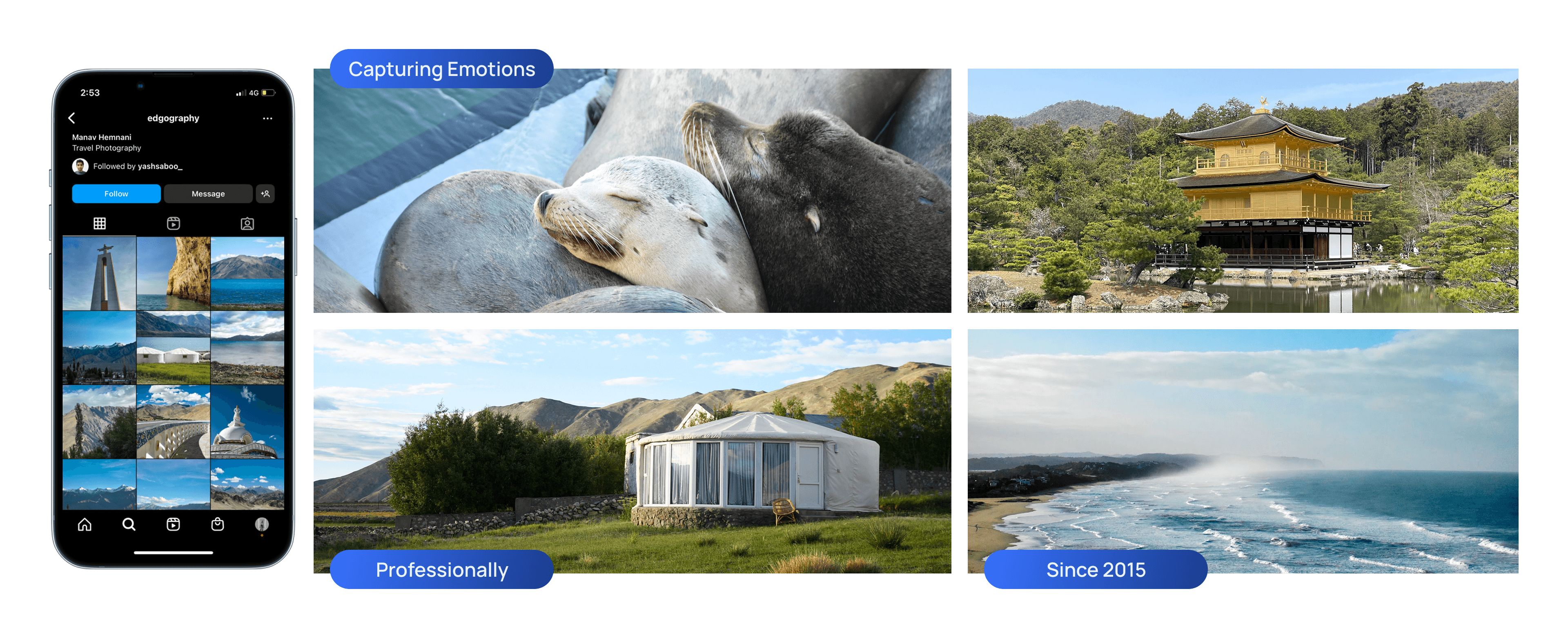
While my personal connection to creativity was shaped through music, photography became the ideal medium to bring this vision to life. It sits at the intersection of art and technique, making it a powerful way to explore how complex systems can be simplified into guided, engaging learning experiences.
Designing the Learning System
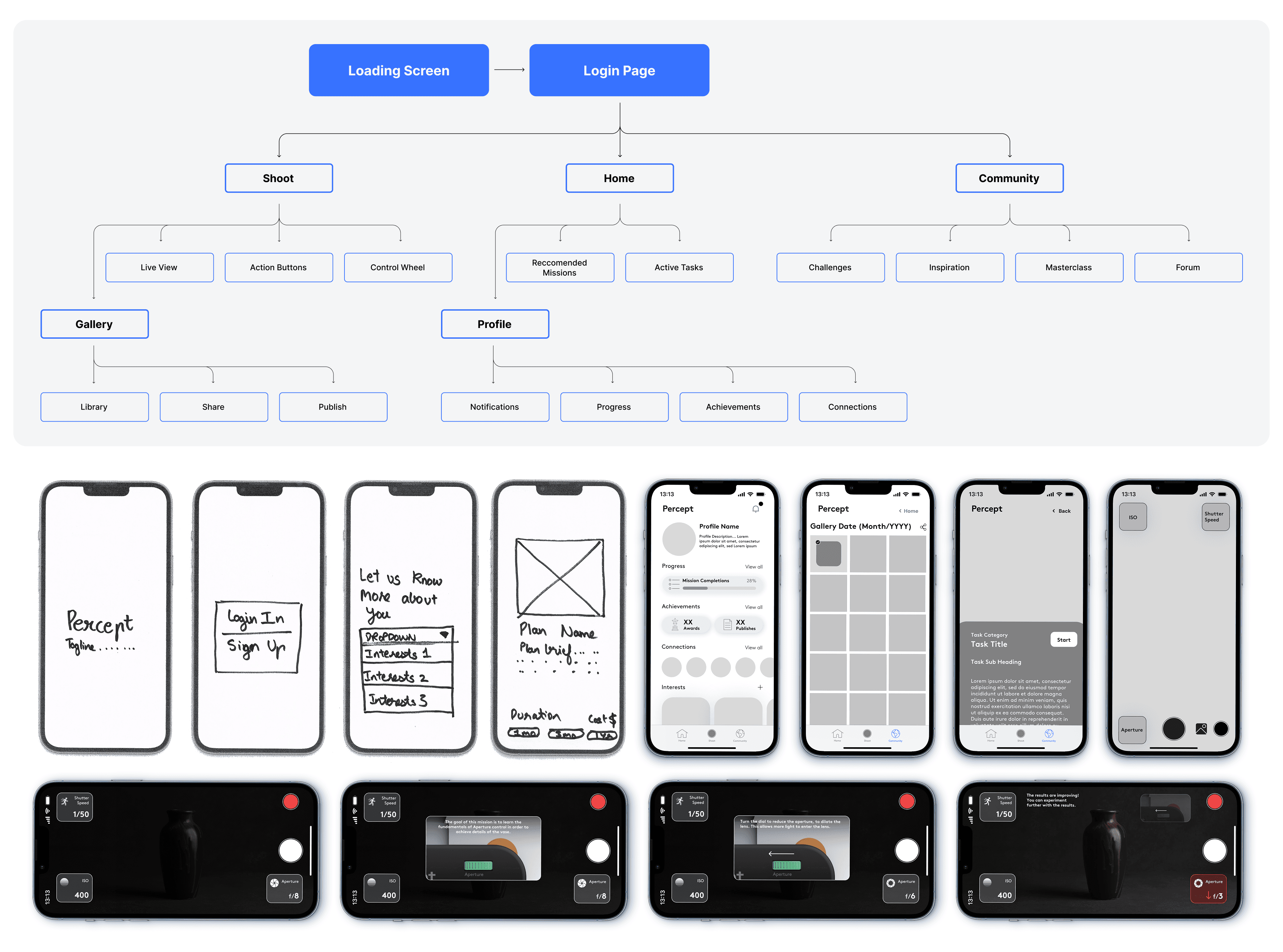
The experience was designed as an interconnected system that guides users from onboarding to practice, reflection, and community. Clear user flows, information hierarchy, and feature relationships ensure that learning feels intentional rather than overwhelming, and that every interaction supports long-term engagement with the hobby.
Adaptive Learning & Interaction Design
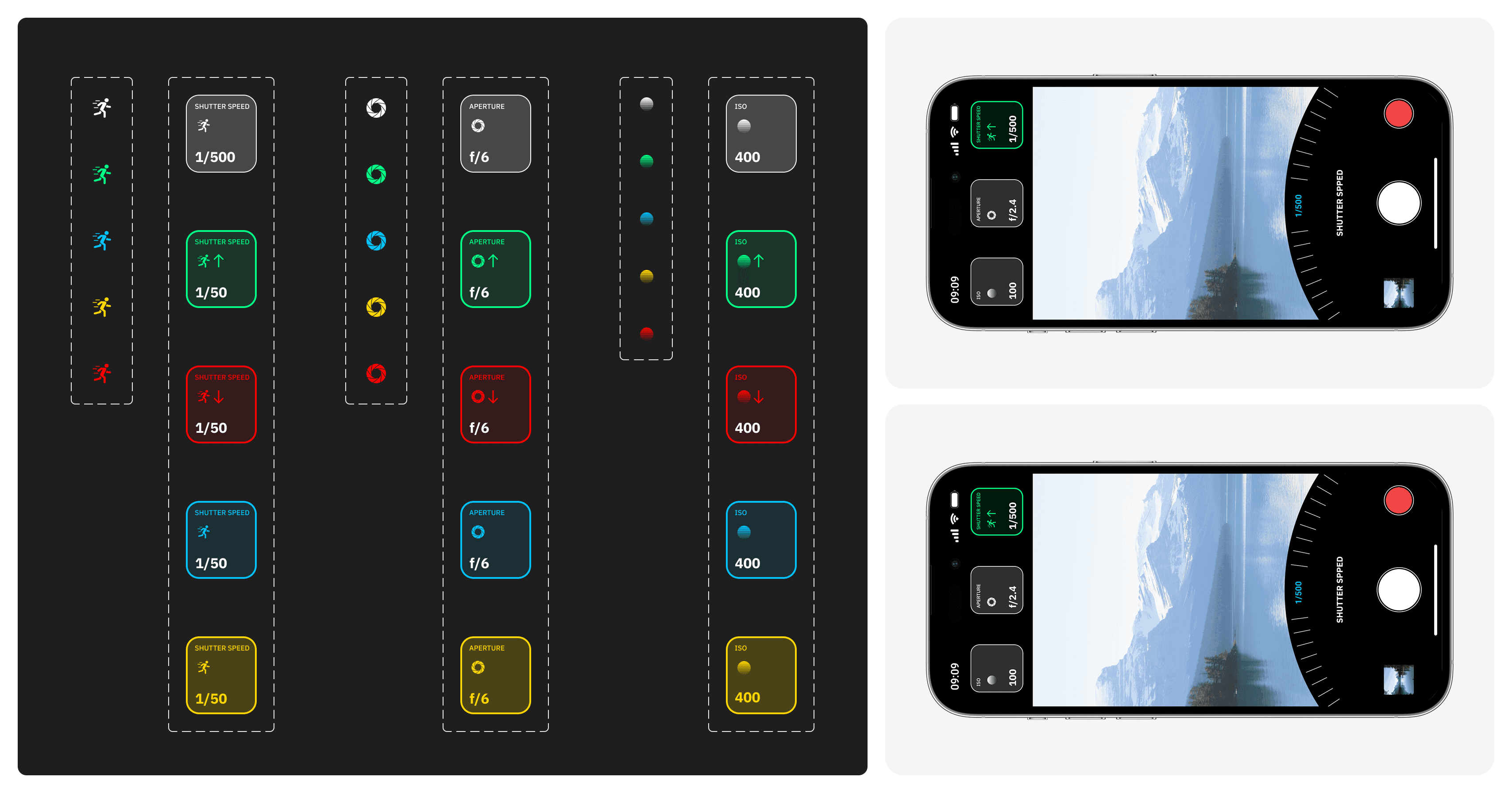
Core camera controls were redesigned into adaptive, real-time interactions that teach users in the moment. Instead of separating learning from practice, the interface responds to user actions with contextual guidance, helping complex concepts like shutter speed, aperture, and ISO become intuitive through use.
A New Perspective to Learning Photography
Originating from being a photographer myself, there's no directive to learning photography. The aim is to create a learning experience around photography that brings about a new perspective.
Experiential Learning: Dynamic View
This view lets you monitor and understand changes. It provides live feedback on the changes you make and analyzes the pictures to hint to the user on techniques to improve their results.
Simplifying the Learning Process
This view lets you monitor and understand changes. It provides live feedback on the changes you make and analyzes the pictures to hint to the user on techniques to improve their results.
Evoke your imagination and make you believe in yourself
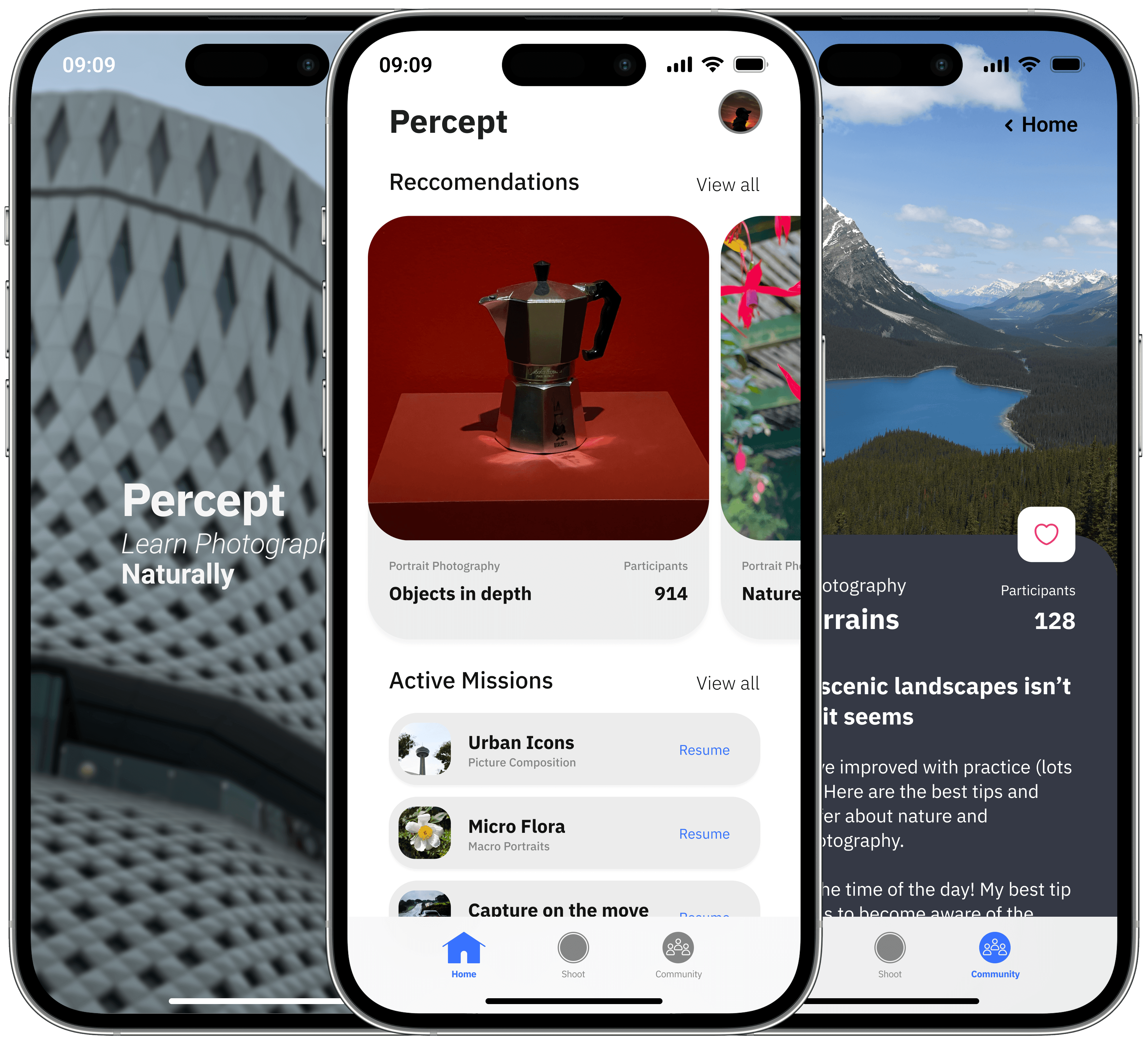
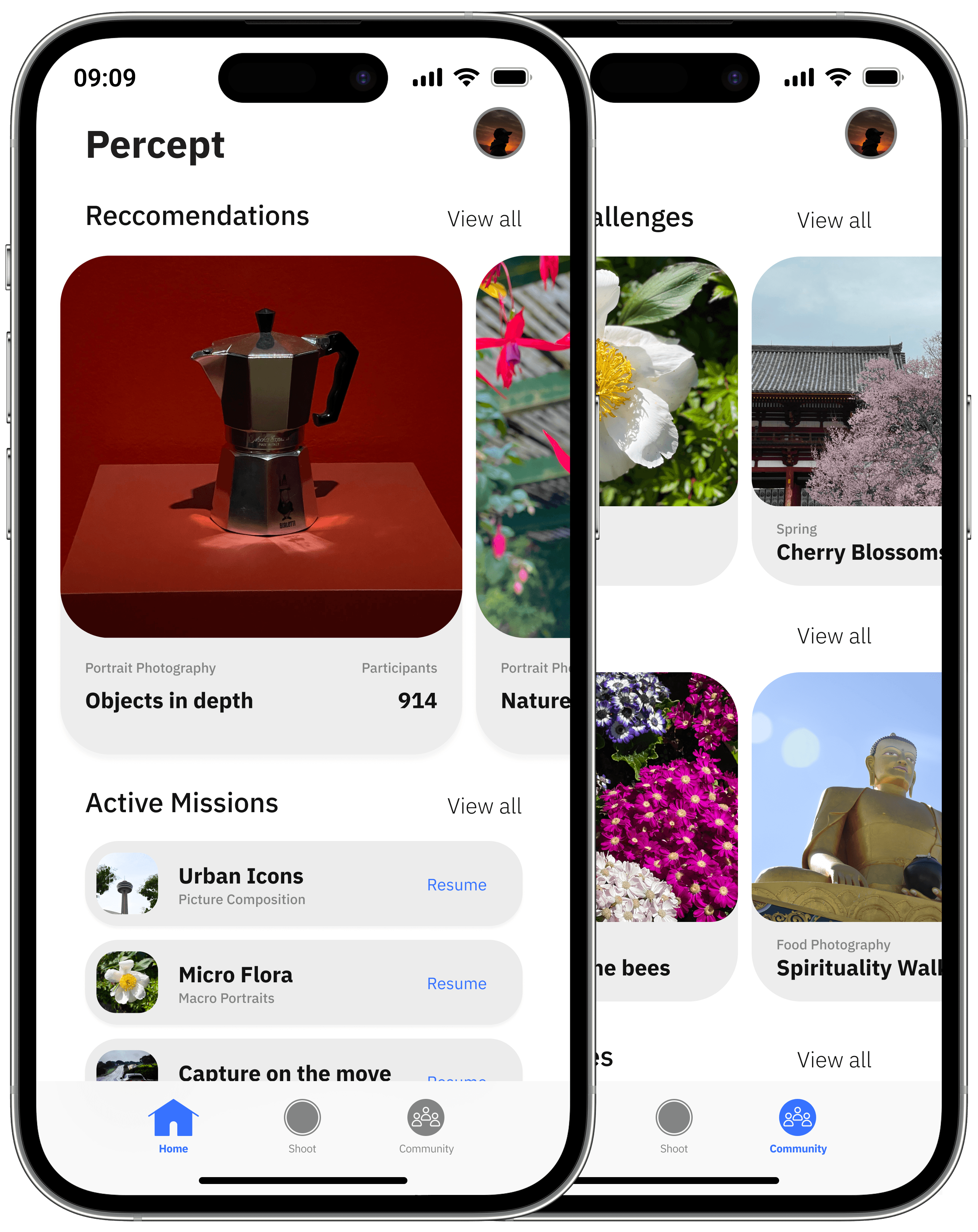
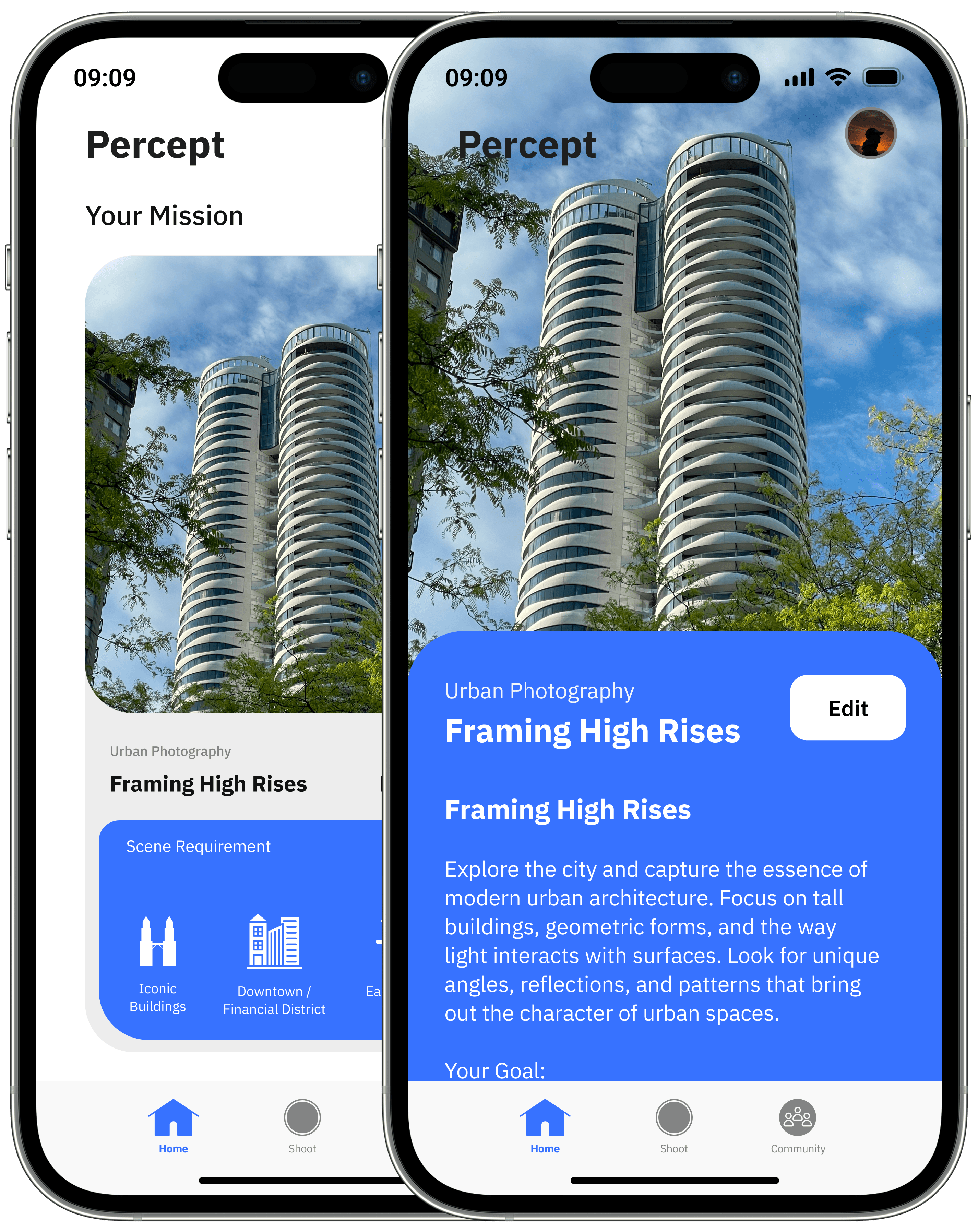
Each mission has a story authored by professional or fellow budding photographers. The task is provided with requirements and the goal.
A process of introspection and knowledge sharing
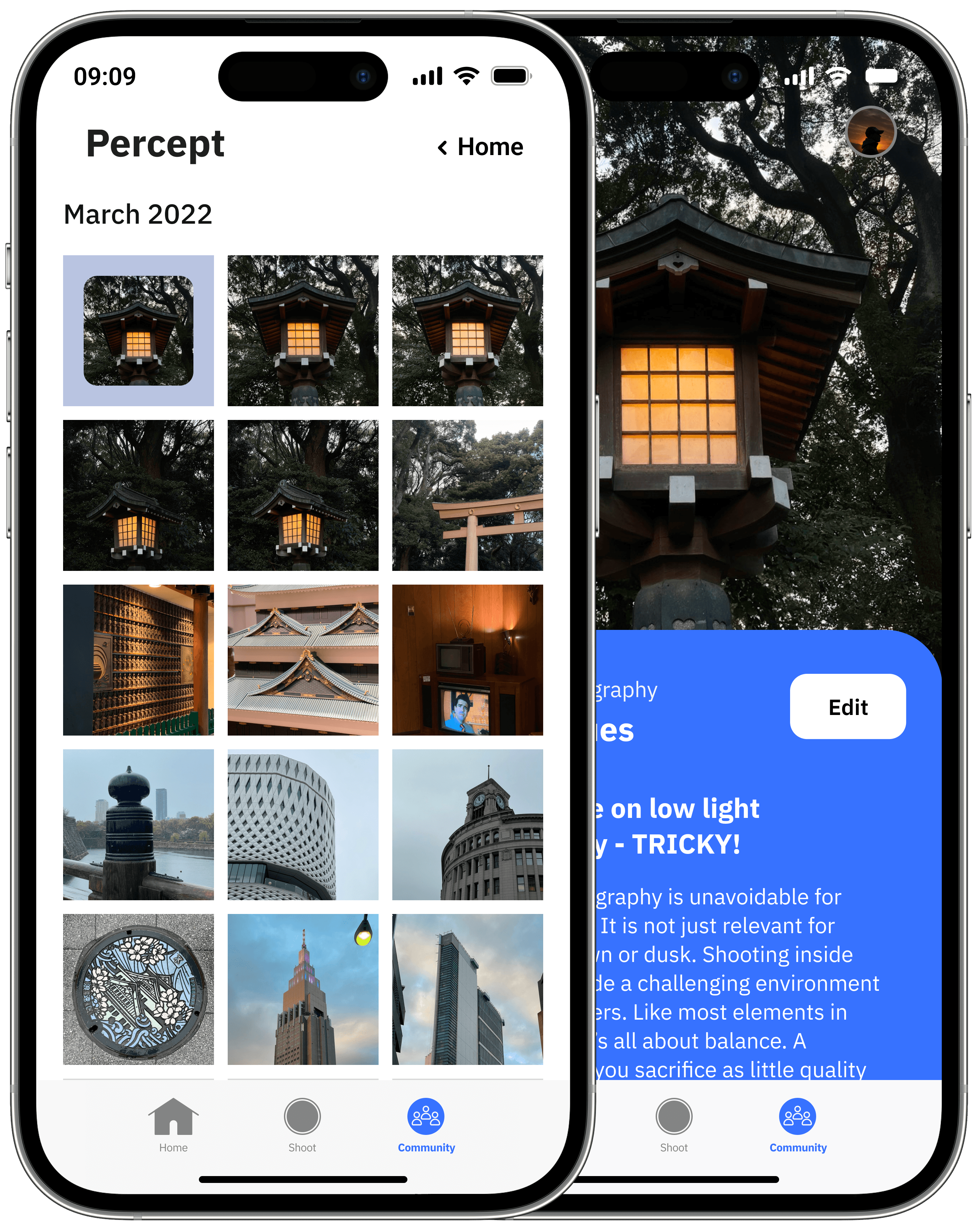
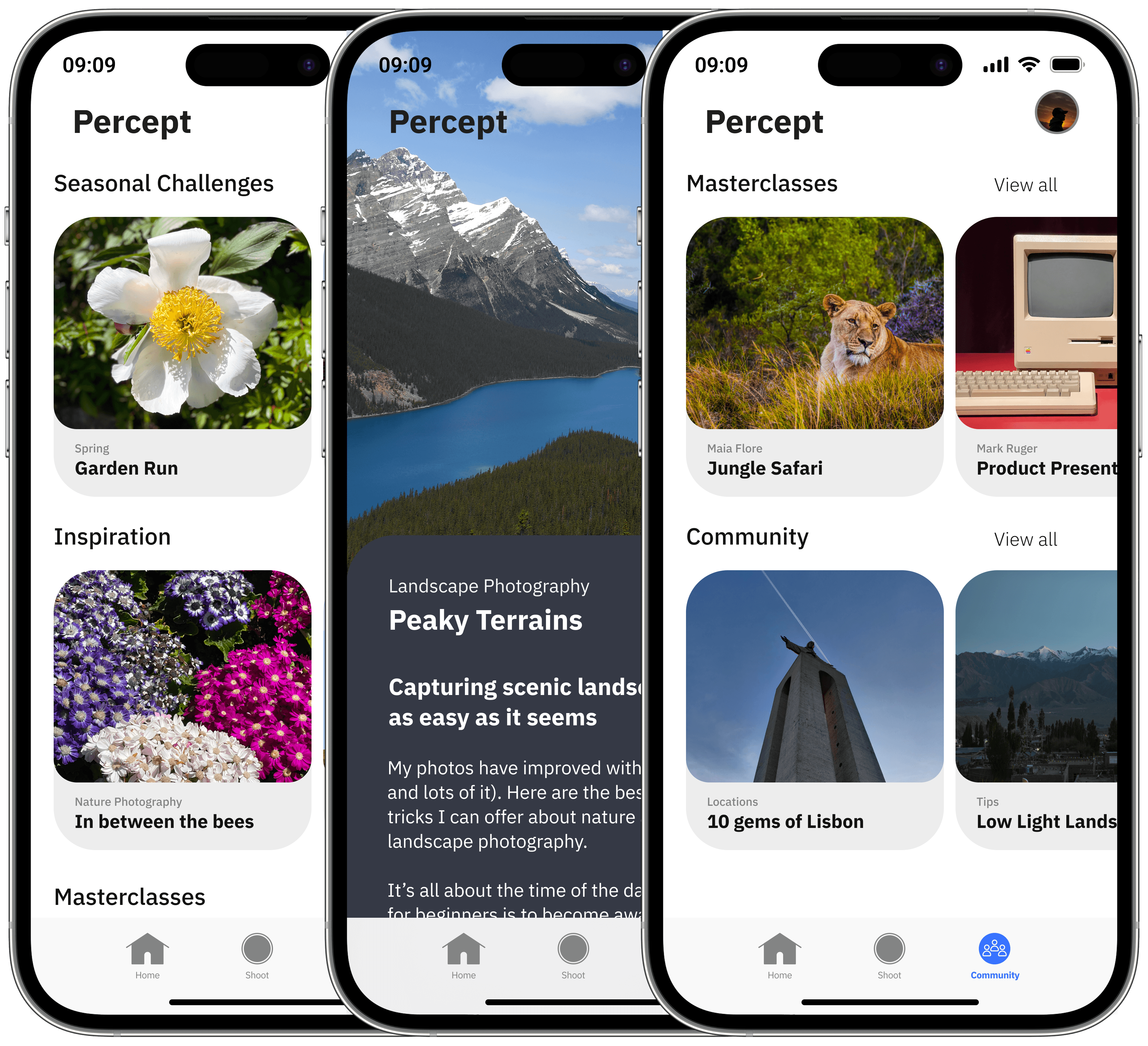
Percept encourages you to share your work with the community. The community is here to learn from you and guide you to improve.
Percept: Reignite your passion
Percept is a mobile application designed to help people reconnect with their hobbies by bridging the gap between interest and technical ability. Starting with photography as a pilot, the app simplifies complex concepts through hands-on experimentation rather than theory-heavy instruction. Built on the principle of experiential learning, Percept encourages users to learn by doing, using guided trial and error to build confidence, skill, and momentum over time.
For the people, by the people
The long-term vision is to create a "Pay it Forward" society—an ecosystem where learning is cyclical and self-sustaining. The concept envisions a world where learners evolve into teachers, sharing their knowledge and masterclasses with the community,. While the project begins with photography, the ultimate goal is to expand into a range of programmes that support communities of different natures, fostering a world where people learn from and teach one another